As the Trump administration searches for a path out of its escalating conflict with Iran, Turkey is preparing for what it sees as a major shift in the Middle East’s balance of power. Turkish officials are increasingly concerned not only about instability spilling across their borders, but also about the growing military and political influence of Israel in the region. In response, Ankara is pursuing a strategy focused on regional cooperation and new security partnerships that rely less on Washington and more on neighboring powers.
Turkey, a NATO member that shares a 350-mile border with Iran, has found itself in a difficult position during the conflict. The war has strained relationships inside the alliance and reinforced concerns in Ankara about the unpredictability of American foreign policy under President Donald Trump. Turkish officials fear that the United States could eventually scale back its involvement, leaving regional countries to manage the fallout on their own.
That uncertainty has pushed Turkey toward what officials describe as a policy of “regional ownership,” aimed at encouraging Middle Eastern nations to solve regional problems without relying heavily on outside powers. In recent weeks, Ankara has held talks with Saudi Arabia, Egypt, and Pakistan as part of an effort to build new strategic and security relationships.
Tacan Ildem, a former Turkish ambassador to NATO and chairman of the Turkish think tank EDAM, said the conflict has highlighted the risks of depending on outside powers to stabilize the region.
“I think regional ownership is crucial because sometimes external powers alien to the very nature of the region’s problems can create a big mess,” Ildem said.
He added that while Turkey remains an ally of the United States, Washington’s priorities do not always align with those of countries directly affected by instability in the Middle East.
Turkey’s ambitions have grown following major regional shifts over the past year, including the collapse of Syrian President Bashar al-Assad’s government and the weakening of Iran-backed militant groups. Turkish-backed insurgents played a key role in Assad’s downfall, creating an opening for Ankara to expand its influence.
🚨 DONALD TRUMP JUST SAID IT PERFECTLY
“American dominance in Western Hemisphere will NOT be threatened under any circumstance!”
“Iran will not have a nuclear weapon…we’re not going to let Iran have a nuclear weapon and blow up the entire Middle East, Israel the entire Middle… pic.twitter.com/7LVsNzZxgk
— Eric Daugherty (@EricLDaugh) May 20, 2026
At the same time, Turkish officials are increasingly wary of Israel’s growing military reach. Israeli operations in Syria, Lebanon, Iran, and Qatar have fueled concerns in Ankara that Israel is becoming more aggressive and less restrained, particularly with continued support from the United States.
Foreign Minister Hakan Fidan recently said Turkey is seeking to strengthen solidarity among regional countries because many now believe they cannot depend on dominant global powers to resolve conflicts fairly.
President Recep Tayyip Erdogan has attempted to position Turkey as a regional mediator capable of communicating with all sides, including Russia, Ukraine, the United States, and Iran. Turkey also remains a major military force, possessing NATO’s second-largest army after the United States and a growing domestic defense industry known for advanced drone technology.
Still, analysts note that Turkey lacks the economic and military strength to shape the region on its own. Asli Aydintasbas of the Brookings Institution said Ankara is exploring smaller regional alliances to protect its interests in an increasingly dangerous environment.
Trump’s return to office has further complicated the situation. Turkish officials see similarities between their concerns and those of European allies that have become wary of Washington’s shifting policies and transactional approach to alliances.
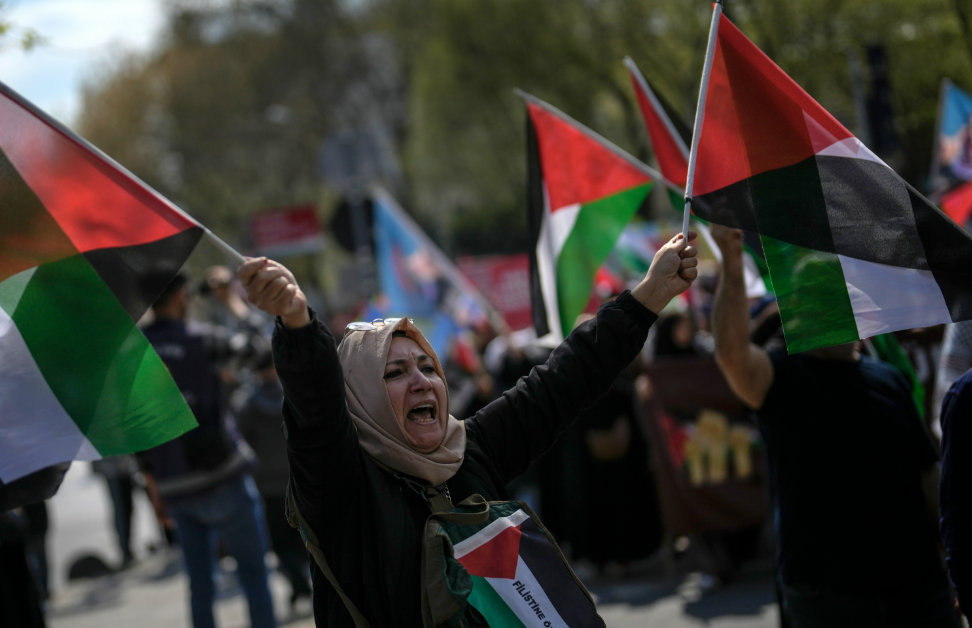
Relations between Turkey and Israel have deteriorated sharply during the Gaza conflict, with Erdogan emerging as one of Israel’s strongest critics. Israeli leaders, meanwhile, accuse Turkey of supporting Islamist groups hostile to Israel and view Ankara as a growing rival for influence across the Middle East.
Despite the rising tensions, Turkish officials insist they do not want a military confrontation with Israel. One Turkish diplomat described such a conflict as a “lose-lose situation” that would benefit no one. Still, Ankara wants to make clear that it is prepared to defend itself if necessary.
Analysts say the relationship between Turkey and Israel could become one of the defining dynamics in the region after the Iran conflict ends. Both countries are expected to emerge as the Middle East’s two most powerful militaries, and how they manage that rivalry may shape the future stability of the region.