“Words taken down” is not a phrase most people hear outside Congress. But inside the House of Representatives, it usually means the chamber has hit a breaking point.
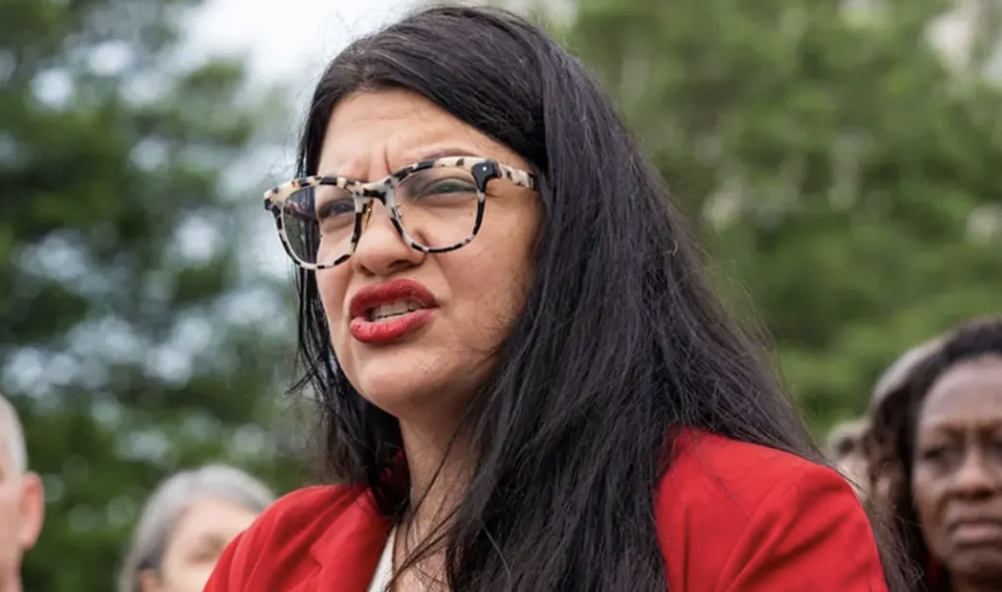
That happened recently during a debate over a war powers resolution involving Lebanon. Rep. Rashida Tlaib, D-Mich., introduced the measure as part of an effort to limit President Donald Trump’s involvement in the conflict with Iran, particularly as tensions rise elsewhere in the region.
Tlaib, a Palestinian-American and one of two Muslim women in Congress, has long been one of the House’s most outspoken critics of Israel.
“We must end U.S. participation in the Israeli apartheid regime’s invasion of Lebanon,” Tlaib said during the debate. “The Israeli military continues to target journalists like Amal Khalil and use our tax dollars to commit war crimes.”
The debate quickly turned personal when Rep. Max Miller, R-Ohio, who is Jewish, sharply criticized Tlaib and invoked Hezbollah.
“Its members are butchers that you like to hang out with to a certain extent,” Miller said. “Yes, you advocate for terrorists on a daily basis. You advocate for a terrorist regime every single day.”
Tlaib shouted back from across the chamber, though her remarks were not picked up clearly because she was not speaking into a microphone.
“Oh, I’m sorry. Are we getting a little emotional?” Miller responded.
That set off more shouting from Tlaib. Rep. Jay Obernolte, R-Calif., who was presiding over the House at the time, banged the gavel and tried to restore order.
“Colleagues, this is a serious topic. We will debate it respectfully and deliberately,” Obernolte said. “Is the gentlewoman from Michigan making a motion?”
By then, Tlaib had reached a microphone.
“Yes, Mr. Speaker, I am. That is a direct attack on my character. I please request to strike the words down,” she said.
That was the key moment. Tlaib was asking for Miller’s remarks to be formally reviewed under House rules.
When a member asks for “words taken down,” the House essentially pauses. Business stops. Debate stops. Speeches, amendments, and votes are put on hold while staff and stenographers identify the disputed language and determine whether it violated House rules.
The phrase refers to the process of recording, or “taking down,” the exact words a member used. House rules bar lawmakers from making personal attacks on one another, questioning another member’s motives, or engaging in what the chamber calls “personalities.” In simpler terms, members can criticize arguments, votes, and policies, but they are not supposed to personally disparage their colleagues.
Tlaib argued that Miller crossed that line by suggesting she liked to “hang out” with terrorists and that she advocated for them. She also appeared to take issue with his comment about her “getting a little emotional.”
If the chair finds that a member broke House rules, the lawmaker can be ruled out of order. The offending words can be removed from the record, and the member can be barred from speaking on the House floor for the rest of the day. In some cases, the ruling can be appealed, which can lead to a vote by the full House.
After about an hour, it became clear that Miller would not apologize or withdraw his remarks.
“The words of the gentleman from Ohio contain an allegation that the gentlewoman from Michigan is a ‘butcher’ and affiliated with a terrorist organization,” Obernolte said. “Such remarks impugn the patriotism and loyalty of the member of the House.”
Obernolte ruled that Miller’s comments were not in order and said the words would be stricken from the record. Miller was then barred from speaking on the floor for the rest of the day.
But the fight did not end there.
House Foreign Affairs Committee Chairman Brian Mast, R-Fla., who was managing the war powers debate for Republicans, spoke on Miller’s behalf after Miller was silenced.
“I’m going to deliver a message from Rep. Miller of Ohio,” Mast said, quoting his colleague. “‘Yes, I said it. I own it. And I stand by it.’”
Mast then attempted to enter into the record an article about Tlaib and a Facebook group where Hamas terrorists were allegedly glorified. Tlaib objected. Mast also tried to submit a transcript related to Tlaib’s comments about genocide, and Tlaib objected again.
The episode was a reminder that House procedure can turn even a few disputed words into a lengthy institutional standoff.
Similar floor fights have happened before. In 1994, Rep. Maxine Waters, D-Calif., clashed with then-Rep. Pete King, R-N.Y., leading the House to rule Waters out of order. At the time, then-House Speaker Tom Foley, D-Wash., came to the floor personally to handle the matter rather than leaving the ruling to a lower-ranking presiding officer.
The day after the Tlaib-Miller clash, Obernolte released a bipartisan framework on artificial intelligence. Asked how an AI chatbot might handle a similar dispute if it were presiding over the House, Obernolte said the technology would likely be capable of applying the rules.
“AI is actually very good at this,” he said. “You give it a rules manual, and then you give it a specific instance and say, ‘Is this in compliance with rules or is this a violation of the rules?’”
Obernolte said he believed Miller’s remarks clearly crossed into “personalities” and that he made the right ruling. He added that AI probably would have reached the same conclusion.
The idea raises an unusual question: Could Congress ever hand part of its parliamentary refereeing to artificial intelligence?
For now, that job still belongs to people. But given how often lawmakers test the boundaries of decorum, any future AI referee would likely have no shortage of words to take down.