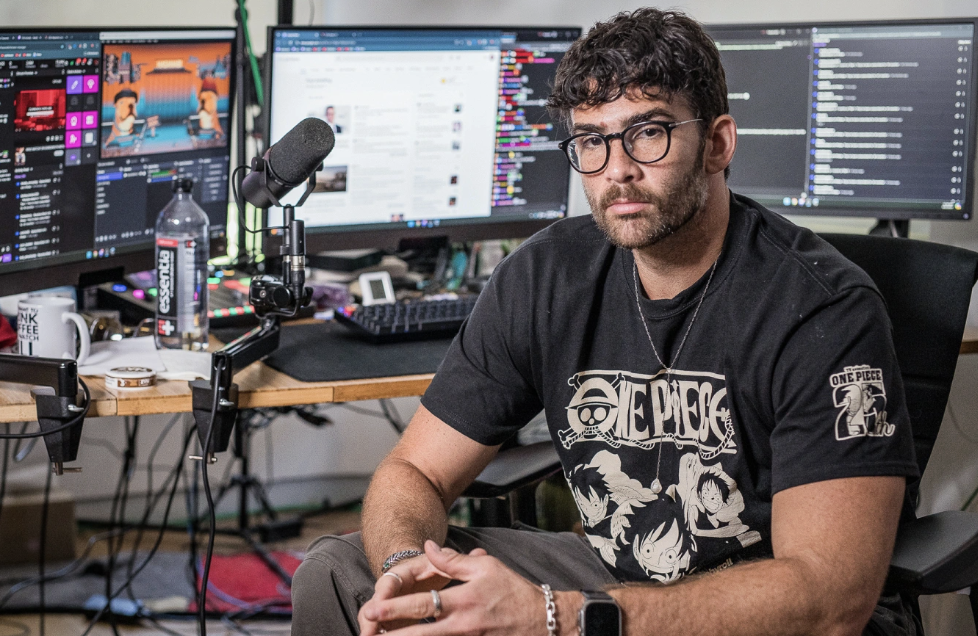
The New York Times recently published a conversation that leans into a growing — and controversial — attitude among some younger Americans about theft, particularly when it’s directed at large corporations.
The piece, written by culture editor Nadja Spiegelman, centers on what she calls “microlooting.” The idea is fairly simple: taking small amounts from big companies and brushing it off as either survival or a kind of low-stakes protest against wealth inequality. To explore that mindset, Spiegelman sat down with political commentator Hasan Piker and writer Jia Tolentino for a wide-ranging discussion about when, if ever, stealing feels justified.
Early on, the conversation makes clear that both guests are willing to blur traditional moral lines. Piker, in particular, doesn’t hedge much. He says he supports piracy across the board and suggests that, if it were easier to get away with, he’d extend that mindset even further. At one point, he even floats the idea that people should be committing more “cool crimes,” like bank robberies or stealing high-value artifacts — comments that come off as intentionally provocative, but still striking in how casually they’re delivered.
A bit later, Piker adds “I’m pro stealing from big corporations, because, you know, they steal quite a bit more from their own workers. However, one thing that might even help your ethical dilemma is the fact that the automated process that they design, these companies know will… pic.twitter.com/fB7U8Y6HN7
— Alex Christy (@alexchristy17) April 22, 2026
Tolentino takes a slightly narrower approach but lands in a similar place. She admits to using tools that bypass paywalls, including for publications she writes for, and downplays the seriousness of shoplifting from large chains like Whole Foods. In her view, those acts don’t carry much moral weight, especially when compared to the scale of corporate power and profit.
A big part of the argument rests on the idea that large companies already anticipate theft and absorb it into their business models. Piker argues that corporations factor losses into pricing and still come out ahead, often aided by cost-cutting measures like automation. From that perspective, small-scale theft isn’t seen as meaningfully harmful — more like a drop in the bucket.
The conversation also touches on broader economic inequality. Spiegelman points out the widening gap between CEO pay and average worker wages over the past several decades, a statistic that both guests use to support their views. Piker frames it more bluntly, arguing that the system already tolerates certain forms of exploitation — particularly wage theft — while punishing others more aggressively.
The New York Times platformed Hasan Piker on their “The Opinions” podcast to promote theft as a form of protest. The Mao fan said, “Yeah, I’m pro-piracy all the way, like, across the board. Would you pirate a car? Yes. You know, if you could.”
He also says he would steal from… pic.twitter.com/D05oo7WEwk
— Alex Christy (@alexchristy17) April 22, 2026
Still, the discussion doesn’t fully resolve the obvious tension. When Spiegelman raises the possibility that widespread theft could lead to higher prices, Piker largely dismisses the concern, even suggesting that a bit of disruption might be necessary. He pivots instead to a broader political point, praising policies and leaders he sees as challenging the current economic structure.
What emerges from the exchange isn’t a carefully argued philosophy so much as a snapshot of a mindset — one that mixes frustration with inequality, skepticism of institutions, and a willingness to rethink basic rules. Whether that perspective reflects a broader generational shift or just a loud corner of it is still an open question.