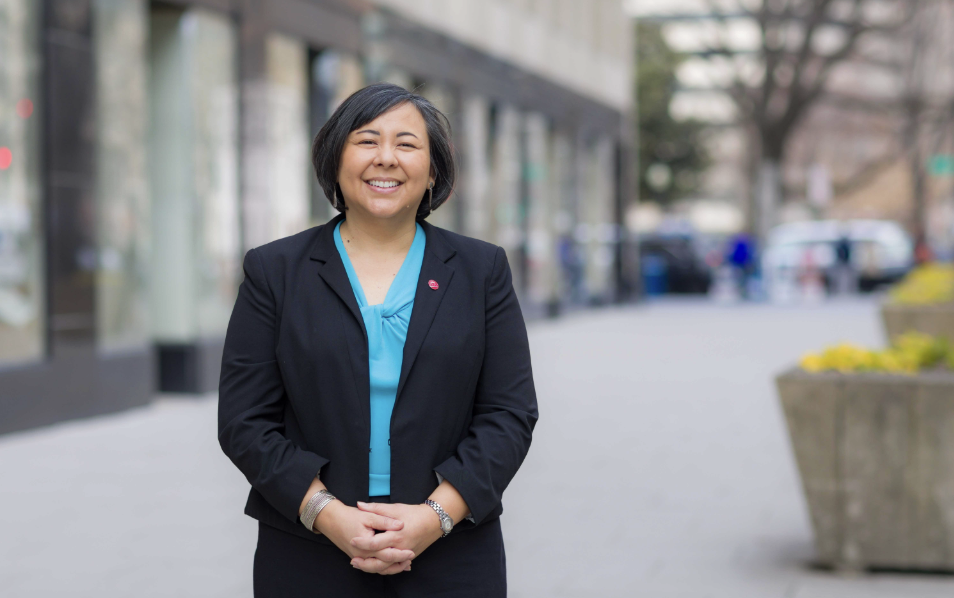
Margaret Huang’s time leading the Southern Poverty Law Center coincided with a period of major change for the organization, both in its public posture and in how critics perceived its work.
Huang became president and CEO in 2020, stepping in after the departure of co-founder Morris Dees, who was removed amid internal allegations of misconduct and concerns about workplace culture. Her compensation in 2023 totaled just over $500,000, according to available filings. During her tenure, the group continued its long-standing focus on tracking extremist movements, but it also drew sharper criticism from conservatives who argued it had taken on a more openly political tone.
The SPLC has for years published reports and maintained lists identifying organizations it considers to be promoting hate or extremism. Under Huang, those lists included a range of conservative and religious groups, such as the Alliance Defending Freedom, Moms for Liberty, and the Family Research Council. The organization also used its “Hatewatch” platform to highlight individuals and movements it viewed as influential in spreading extremist ideas.
Huang herself spoke frequently about what she described as the growing influence of far-right ideology in American politics. In a 2023 opinion piece, she argued that ideas once considered fringe had moved closer to the political mainstream, particularly following the 2016 election of Donald Trump.
She wrote that these movements were shaping policy debates and influencing institutions like schools and libraries, often by amplifying conspiracy theories or exploiting public fears.
Critics, however, saw the organization’s work differently. Some accused the SPLC of blurring the line between monitoring extremism and labeling mainstream conservative viewpoints as dangerous. That criticism intensified as political divisions deepened, with opponents arguing the group had shifted away from its earlier reputation as a civil rights-focused legal organization.
The Justice Department added a new layer of scrutiny this week, announcing an indictment that alleges the SPLC paid millions of dollars over several years to individuals connected to extremist groups in exchange for information.
According to the allegations, those payments were made to sources tied to organizations such as the Ku Klux Klan and the National Socialist Party of America. The government claims the arrangement went beyond standard investigative practices, though details of the case are likely to be contested in court.
The SPLC has pushed back strongly. Current leadership said the organization is being unfairly targeted and characterized the case as politically motivated. They argue that working with informants, even those embedded in extremist groups, has long been a tool used by journalists and law enforcement to understand and expose dangerous networks.
Huang left her role in 2024 following a round of layoffs that drew internal and external criticism. She said at the time that her departure was driven by personal reasons, including the challenge of balancing professional responsibilities with family life. Since then, she has taken on a senior advisory role at the Leadership Conference on Civil and Human Rights.