Tennessee Gov. Bill Lee signed a new congressional map into law Thursday in a move Republicans hope will strengthen their hold on the US House and potentially eliminate the state’s lone Democratic congressional seat.
The map overhaul comes as part of a broader national redistricting fight playing out in multiple states ahead of the 2026 midterm elections, with both parties looking for ways to gain an edge in Congress.
Tennessee’s current congressional delegation consists of eight Republicans and one Democrat, longtime Memphis-area Rep. Steve Cohen. Under the newly approved map, Republicans are expected to have a path to winning all nine congressional districts.
The legislation moved quickly through the GOP-controlled state legislature Thursday, sparking heated protests from Democrats inside the Capitol. Following the vote, Democratic lawmakers held signs, blasted airhorns, and eventually walked out of the state House chamber in protest.
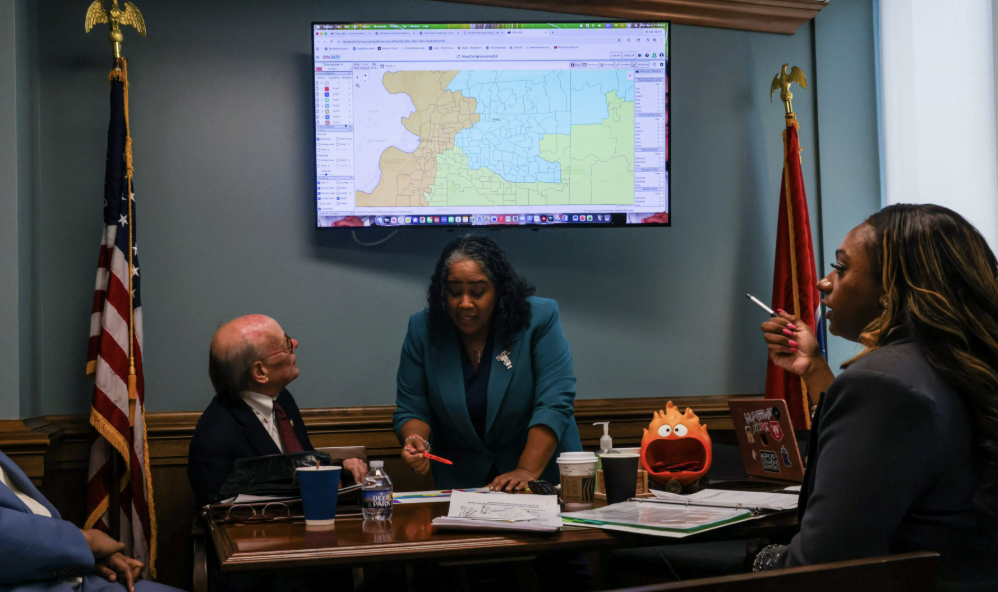
At the center of the controversy is the redrawing of the Memphis-based district represented by Cohen since 2007. Republicans redesigned the district by splitting portions of Memphis and Shelby County into three separate congressional districts, a move critics argue weakens the voting power of Black residents and Democratic voters in the region.
Cohen blasted the plan shortly after its passage, calling it “a blatant, corrupt power grab that would destroy the black community’s and our entire city’s voice.”
The Republican push came after a major Supreme Court ruling last week involving Section 2 of the Voting Rights Act. The decision effectively narrowed the legal standard courts use when evaluating race-based redistricting claims, requiring proof of racial discrimination before courts can order maps redrawn to protect minority voting power.
That ruling opened the door for Tennessee Republicans to revisit district boundaries that had previously been shaped in part by Voting Rights Act considerations.
The new map is expected to face legal challenges almost immediately. Cohen has already vowed to sue, arguing the plan unfairly targets minority representation in Memphis.
The fight in Tennessee reflects a growing nationwide redistricting battle that has escalated far earlier than normal. Typically, congressional maps are redrawn once every decade following the US census. But several states are now reconsidering district lines mid-decade in an effort to maximize partisan advantages before the next election cycle.
States including Texas, California, Missouri, Virginia, Ohio, and Alabama are all exploring map changes or facing ongoing litigation tied to redistricting disputes.
Republicans in Tennessee have openly framed their efforts as part of that larger national political strategy. Some GOP leaders argued the state should respond aggressively after a recent Virginia referendum cleared the way for Democrats there to pursue maps that could potentially add several Democratic seats in Congress.
President Trump remains overwhelmingly popular in Tennessee, carrying the state by roughly 30 points over former Vice President Kamala Harris in the 2024 election. Republicans believe the new district boundaries better reflect the state’s overall political makeup.
The protests surrounding the vote became tense at times. State troopers removed Democratic state Rep. Justin J. Pearson and his brother KeShaun Pearson from a gallery area after they participated in a sit-in demonstration opposing the map changes.
With Tennessee’s congressional primaries scheduled for Aug. 6, legal and political battles over the new map are expected to intensify in the coming months as both parties prepare for another high-stakes fight over control of the House.