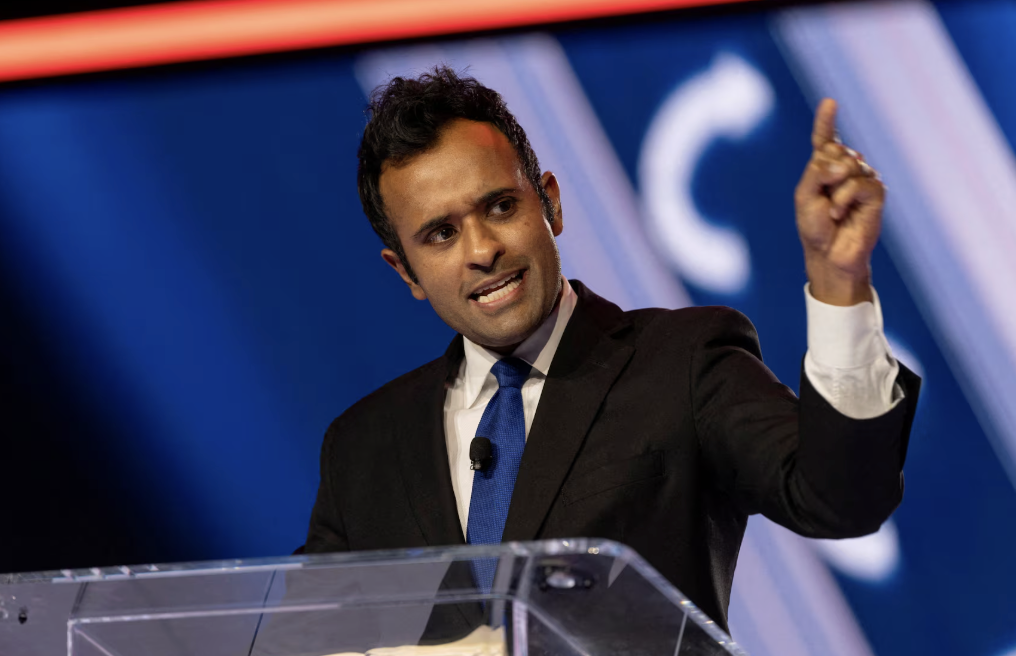
Ohio gubernatorial candidate Vivek Ramaswamy is calling for an aggressive crackdown on Medicaid fraud after a recent investigation raised questions about how millions of taxpayer dollars may have been routed through questionable home-healthcare providers across the state.
The probe reportedly identified 288 separate Ohio home-healthcare companies registered under the same address. Investigators also found that some listed business locations appeared abandoned or in poor condition, with little evidence that any healthcare services were actually being provided.
Speaking with Fox News host Kayleigh McEnany on “Saturday in America,” Ramaswamy said the findings point to a much larger issue within Ohio’s Medicaid system.
“We’re going to have to take a deep, hard look at the way the $40-plus billion in state Medicaid dollars are being spent,” he said.
Ramaswamy, who is seeking the Republican nomination for governor, argued that any confirmed misuse of public funds should result in criminal prosecution.
“I think the right answer is any instance of waste, fraud, abuse deserve to be prosecuted,” he said. “We intend to investigate them aggressively, as well as prosecute aggressively, to send a deterrent signal that our government is not a piggy bank, the taxpayer is not a piggy bank to be bilked.”
The allegations surfaced following a Daily Wire report that described what it characterized as widespread fraud involving Medicaid-funded home-healthcare operations in Ohio. The report drew comparisons to a separate scandal involving childcare assistance programs in Minneapolis, where investigators uncovered fraudulent businesses accused of improperly collecting government funds.
Ramaswamy blamed what he called “downstream policies” tied to open borders and an expanded federal welfare system for creating conditions where abuse can flourish.
“That’s a big problem,” he said during the interview.
Ohio Gov. Mike DeWine’s administration pushed back on the suggestion that fraud is being ignored or allowed to spread unchecked. In a statement to Fox News, DeWine’s office defended the state’s oversight process and pointed to several anti-fraud safeguards already in place.
According to the governor’s office, Ohio uses electronic visit verification systems for hourly care workers, requires signed daily activity logs, conducts audits and surveys, performs background checks on providers, and regularly reassesses patients’ medical needs.
The administration also noted that state agencies already have internal systems dedicated to identifying waste, fraud, and abuse within Medicaid programs.
The Ohio Department of Medicaid acknowledged concerns raised in the report and said some of the providers mentioned were already under review before the investigation became public.
“Upon initial review, some of the entities mentioned in the series are no longer Ohio Medicaid providers or have not billed Medicaid in several years,” the department said in a statement. “Some other providers are subject to ongoing investigation.”
Even so, Ramaswamy argued that the issue requires a broader review of the system rather than isolated responses to individual cases.
“We can’t fix the past. We can fix the future,” he said. “It’s not just responding to one news story or another as a game of whack-a-mole.”
He compared the situation to the “broken windows” theory in policing, arguing that visible signs of dysfunction can point to deeper systemic problems.
“If you have a broken window somewhere, it’s a reminder that we have to take a systematic look at the whole thing,” he said.