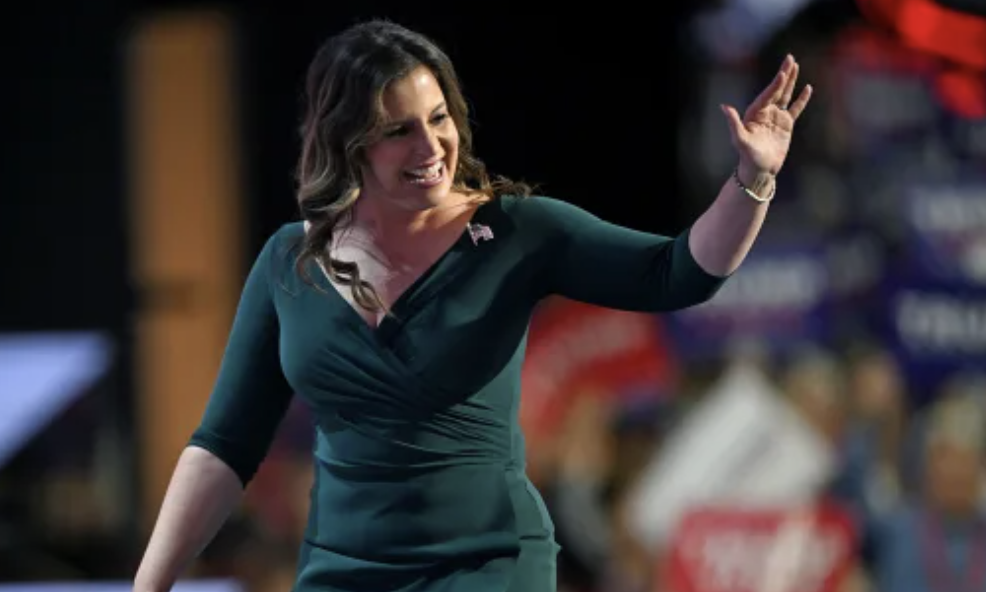
Rep. Elise Stefanik pushed back forcefully on Sunday against claims that President Donald Trump’s recent comments about Iran amounted to a call for genocide, rejecting the idea outright during a tense interview on CNN’s State of the Union.
When host Jake Tapper pressed her on the issue, Stefanik didn’t hedge. “President Trump didn’t call for genocide, Jake,” she said. “You are putting those words in his mouth.” The exchange quickly grew pointed, reflecting the broader debate over how to interpret Trump’s rhetoric as tensions with Iran remain in focus.
Critics have taken issue with Trump’s language about eliminating threats, arguing that it could be read as targeting more than just Iran’s leadership. The concern, they say, is that such phrasing risks blurring the line between a government and its civilian population. But Stefanik rejected that reading, aligning with the administration’s position that the comments were clearly aimed at Iran’s ruling regime, not its people.
She emphasized that distinction several times. “He’s targeting the terrorist regime,” she said, framing Trump’s remarks as part of a broader strategy to confront what the U.S. government has long labeled a state sponsor of terrorism.
Tapper raised the question of whether talk of “wiping out” threats crosses a rhetorical line, especially given how it might be interpreted internationally. Stefanik dismissed that concern, accusing critics and the media of stretching the meaning of Trump’s words. “You’re adding genocide. That’s not what he’s stating,” she said.
❗️CNN’s Jake Tapper SPEECHLESS after Rep. Elise Stefanik PUMMELS him for LYING about President Trump:
“TYPICAL CNN! If you want to compare the president to university presidents who failed to call for the condemnation of calls for GENOCIDE of Jews, that’s on YOU!”
TAPPER: Call… pic.twitter.com/gVVB1iDNZl
— Morse Report (@MorseReport) April 19, 2026
At one point, she drew a comparison to past congressional hearings involving university leaders, suggesting that, unlike those witnesses, Trump had been clear in his intent. “The difference with those university presidents is they couldn’t answer the simple, direct question,” she said. “President Trump didn’t call for genocide.”
Stefanik also shifted the focus to Iran itself, pointing to the government’s track record. She argued that the regime has been responsible for widespread violence, including against its own citizens.
“The Iranians have killed tens of thousands of their own people,” she said, adding that Trump’s approach had been effective in forcing engagement. She credited him with bringing Iran to the negotiating table and helping secure a ceasefire.
She went further, criticizing those who continue to raise alarms about Trump’s rhetoric. “If you want to prop up the Iranian terrorist regime, that’s on you,” she said, framing the debate as a choice between confronting or enabling Tehran.
The administration’s broader stance has remained consistent: apply pressure to curb Iran’s nuclear ambitions and limit its regional influence, while making clear that the target is the regime, not ordinary Iranians. Stefanik echoed that message again before the interview wrapped, reiterating that Trump’s focus has been on holding Iran’s leadership accountable, not calling for harm against its population.