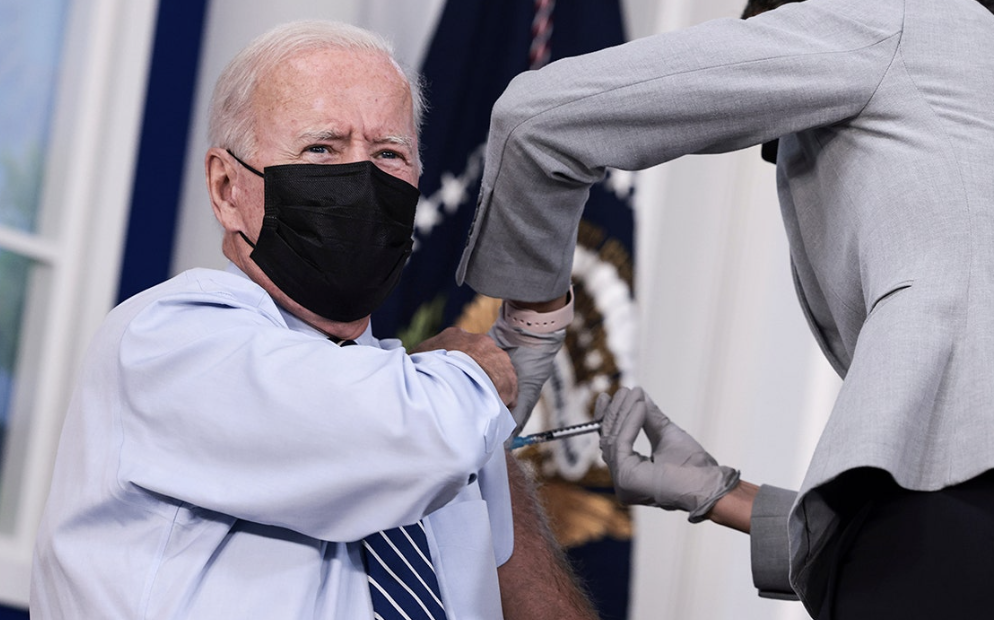
The push to promote COVID-19 vaccines during the pandemic came in many forms, from public service campaigns to strong messaging from top health officials and political leaders. In the rush to increase vaccination rates, critics argue that some of that messaging glossed over important nuances—particularly around differences in risk and the possibility of side effects.
Early on, officials like Dr. Anthony Fauci emphasized broad vaccination, often speaking in terms that applied to the general population rather than distinguishing sharply between age groups or individual risk levels. Around the same time, then-CDC Director Rochelle Walensky made statements suggesting vaccinated people were unlikely to carry or spread the virus. Those claims didn’t hold up as more data emerged, especially with the arrival of new variants, and they later became a point of criticism.
Former President Joe Biden also used stark language in late 2021, warning that unvaccinated Americans could face a “winter of severe illness and death.” His administration attempted to implement vaccine requirements for large employers, while universities and some cities adopted their own mandates or passport systems. The overall approach reflected a clear priority: increasing vaccination uptake as quickly as possible.
At the same time, some lawmakers and analysts have argued that the potential downsides of vaccination didn’t receive the same level of attention. Senator Ron Johnson recently released a report examining how federal health agencies handled data from the Vaccine Adverse Event Reporting System, or VAERS, during the early months of the vaccine rollout.
VAERS is designed as an early warning system, allowing health professionals and the public to report possible side effects. It’s not a controlled study and can’t establish causation on its own, but it can flag patterns that may warrant further investigation. According to Johnson’s report, an FDA official, Dr. Ana Szarfman, used updated data analysis methods and identified a number of statistical signals that could indicate potential adverse events linked to the vaccines.
The report claims that Szarfman shared her findings internally, including signals related to conditions like heart issues and other serious outcomes. It also alleges that her work did not receive sustained follow-up and that she was eventually told to stop certain analyses. Internal discussions cited in the report suggest some officials were concerned that preliminary signals—especially if not fully understood—could be misinterpreted or fuel vaccine hesitancy.
There were also technical challenges. The report describes something called “masking,” where a very common reported event can make it harder to detect less frequent signals in large datasets. According to the findings, adjusting for this effect revealed additional patterns that hadn’t been previously identified.
None of this, on its own, proves a causal link between vaccines and specific adverse events. Even critics acknowledge that VAERS data requires careful interpretation and follow-up through more rigorous studies. But the report raises questions about how aggressively early warning signals were pursued at a critical moment, when policy decisions were being made quickly.
The debate reflects a tension that defined much of the pandemic response. Public health officials were trying to encourage widespread vaccination to reduce severe illness and death, while also navigating uncertainty about evolving data. Critics argue that this led to overly simplified messaging and, at times, a reluctance to highlight potential risks—particularly for groups like younger, healthier individuals who faced lower odds of severe COVID outcomes.