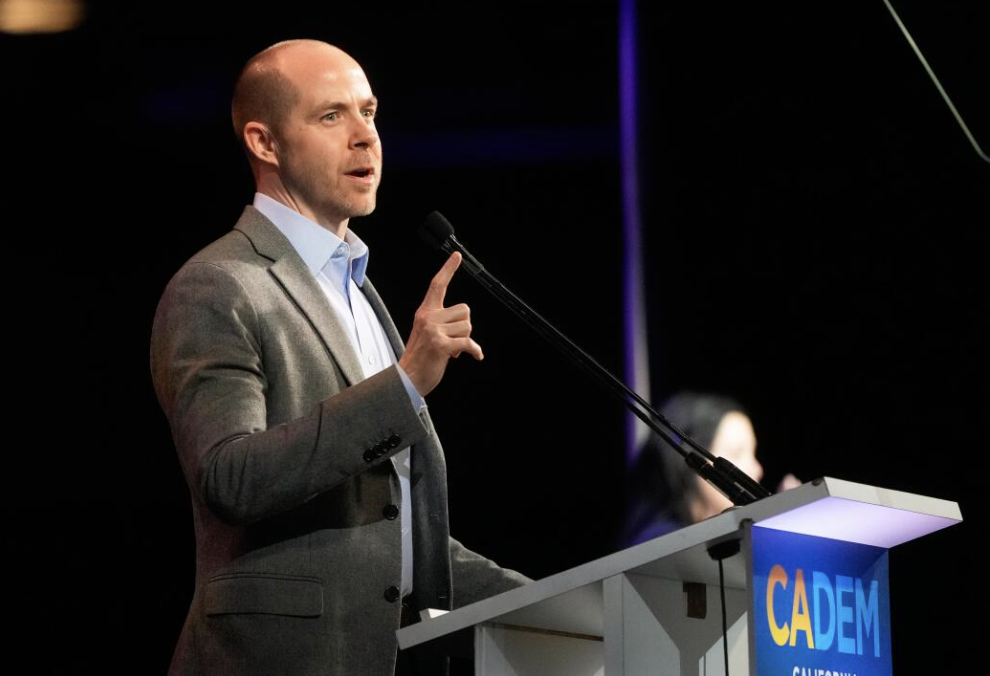
The head of the California Democratic Party is raising concerns about the state’s primary election system, warning that it could create an unusual and unwanted outcome in this year’s race for governor.
Rusty Hicks, who chairs the state party, said he believes the current setup isn’t working as intended and should be reconsidered. California uses a “top-two” or “jungle” primary system, where all candidates run in a single primary regardless of party. The two candidates who receive the most votes move on to the general election, even if they belong to the same party.
Hicks argues that this structure opens the door to scenarios where one party could be completely shut out of the general election. With a crowded field of Democratic candidates this year, there has been concern that Democratic voters could split their support across multiple contenders. If that happens, it could allow two Republican candidates to finish first and second, effectively locking Democrats out of the final round.
He told The Guardian that the system “does not work” and said it should be revised or possibly repealed altogether. While no changes would take effect before the upcoming primary, Hicks said he would like to see a new proposal put in front of voters as soon as possible, potentially later this year. That could come either through the state legislature or through a ballot initiative backed by a well-funded campaign.
So far, Hicks hasn’t laid out a specific alternative. Before the current system was adopted, California used a more traditional format, where each major party held its own primary and selected a single nominee to advance to the general election. That approach is still used in most states.
Voters approved the top-two system in 2010, during Arnold Schwarzenegger’s time as governor. Supporters at the time argued it would reward more moderate candidates and reduce the influence of party extremes by forcing candidates to appeal to a broader electorate from the start. In practice, though, it has sometimes led to unexpected political strategies.
One example came in 2018, when Gavin Newsom’s campaign elevated Republican John Cox, seeing him as an easier opponent in the general election than another Democrat. That kind of maneuvering highlighted how campaigns can try to shape outcomes under the current rules.
This year’s race has brought a different kind of anxiety for Democrats. With several candidates competing for attention, some party figures have even urged lower-polling Democrats to drop out in order to consolidate support and avoid splitting the vote too many ways.
While some of those fears have eased as certain candidates gain momentum, the possibility—however remote—has been enough to spark a broader conversation about whether the system is doing what it was meant to do.