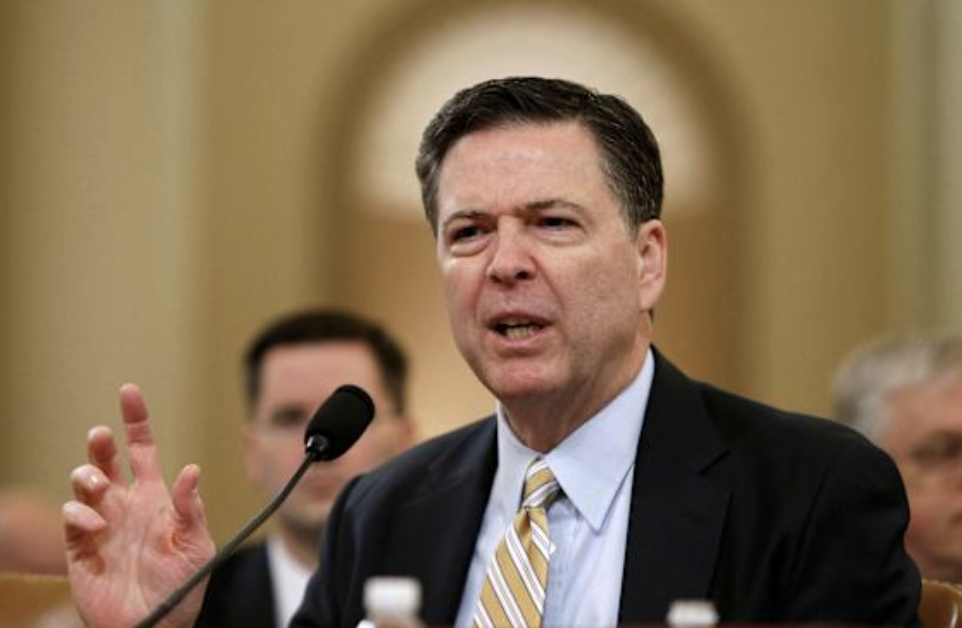
Fox News legal analyst Jonathan Turley is warning that the Justice Department may be stepping into complicated territory with its decision to bring charges against former FBI Director James Comey.
In a column published Tuesday, Turley argued that the case risks turning into what he calls a “free speech trap,” where even distasteful or provocative expression could become the basis for criminal prosecution.
At the center of the case is a social media post Comey shared last year. The image showed seashells arranged on a beach to form the numbers “86 47.” Comey later deleted the post, but not before it sparked backlash and a wave of interpretation about what the numbers might mean. Some critics, including President Donald Trump, viewed it as a coded message suggesting violence. Trump, who is the 47th president, said at the time that the phrase amounted to a call for his assassination.
Turley acknowledges that the message struck many as inappropriate, but he questions whether it crosses the legal threshold for a criminal threat. In his view, the ambiguity of the image is exactly what makes the case difficult.
While “86” is sometimes used colloquially to mean getting rid of something or someone, its meaning can vary widely depending on context. That ambiguity, Turley suggests, could make it hard to prove that Comey intended to issue a direct threat.
The Justice Department, however, appears to see it differently. According to the indictment, Comey is accused of knowingly making a threat against the president’s life or safety through that post. Prosecutors have brought two charges tied to the incident, framing the image as more than just symbolic or abstract expression.
Turley’s broader concern goes beyond this specific case. He argues that the First Amendment is meant to protect not just widely accepted views, but also speech that people find offensive, misleading, or uncomfortable.
In his column, he notes that free speech protections often matter most in cases involving unpopular or controversial expression. Once the government begins treating ambiguous or interpretive messages as criminal threats, he suggests, it risks setting a precedent that could be applied much more broadly.
That doesn’t mean all speech is protected. Turley points out that the law does allow for prosecution in cases involving true threats, fraud, or direct incitement to violence. The challenge, he argues, is drawing a clear line between those categories and speech that is merely provocative or open to interpretation.
The case against Comey is likely to test that boundary. It brings together questions about intent, context, and how meaning is assigned to symbols in a highly polarized political environment. As it moves forward, it could have implications not just for the individuals involved, but for how courts handle similar disputes over speech in the future.