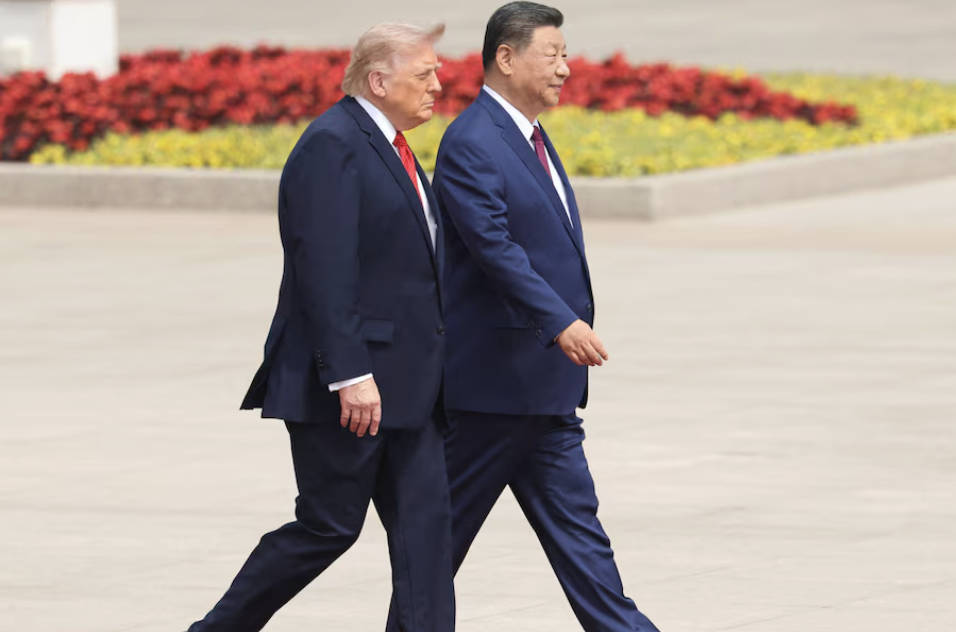
President Donald Trump returned from China with a message that could hardly have been more direct: the window for Iran to make a deal is rapidly closing.
“For Iran, the Clock is Ticking, and they better get moving, FAST, or there won’t be anything left of them. TIME IS OF THE ESSENCE!” Trump warned in a Truth Social post that immediately fueled speculation about what the administration may do next.
The tone was unmistakable. Even before departing for China, Trump had made clear that his patience with the Iranian regime was running out. Now, after what reportedly included discussions with allies and regional partners during the trip, the president appears to be signaling that the negotiation phase may be nearing its end.
🚨 JUST IN: IRAN IS OFFICIALLY ON TRUMP FAFO TIME
TRUMP: “For Iran, the Clock is Ticking, and they better get moving, FAST, or there won’t be anything left of them. TIME IS OF THE ESSENCE!”
47’s patience is just about done.
He’s back from China now, he could UNLEASH
🔥🔥🔥 pic.twitter.com/CWkO1mTb3b
— Eric Daugherty (@EricLDaugh) May 17, 2026
And Iran does not appear interested in calming tensions.
According to reports cited by Fox News correspondent Trey Yingst, officials believe the Iranian regime was behind a major drone strike targeting a nuclear power facility in the United Arab Emirates. The strike reportedly ignited a fire in a generator area on the outskirts of the plant, marking a dangerous escalation in an already volatile region.
If Tehran hoped to convince the international community that it wants stability or serious diplomacy, incidents like this are accomplishing the opposite.
Trump recently described Iran’s latest response during nuclear negotiations as “unacceptable,” particularly regarding the regime’s demand that sanctions and the naval blockade be lifted before it hands over highly enriched uranium stockpiles. From the administration’s perspective, that demand is dead on arrival. Trump and his advisers appear convinced that easing pressure before Iran makes meaningful concessions would simply allow the regime to regroup financially while continuing its destabilizing behavior across the Middle East.
That skepticism has only grown stronger as Iran continues backing proxy activity and, according to intelligence assessments, escalating direct attacks in the Gulf region.
At this point, the administration seems increasingly doubtful that Tehran is capable of producing a serious offer. Iranian negotiators continue to insist publicly that they want peace while simultaneously testing limits militarily. That combination is unlikely to win over a White House that has already demonstrated a willingness to use force when it believes deterrence is failing.
Trump still has several options available short of a full-scale conflict.
“For Iran, the Clock is Ticking, and they better get moving, FAST, or there won’t be anything left of them. TIME IS OF THE ESSENCE!” – President Donald J. Trump pic.twitter.com/33gyF0c0O5
— The White House (@WhiteHouse) May 17, 2026
The economic blockade has already placed enormous strain on Iran’s economy, which was struggling even before sanctions intensified. Oil exports remain restricted, inflation inside Iran has surged, and internal unrest has periodically flared. Maintaining that pressure remains the administration’s baseline strategy.
But there are indications the White House is considering broader action if Tehran continues refusing to compromise.
One possibility involves restarting Project Freedom, a maritime security initiative aimed at protecting shipping lanes and reducing Iran’s ability to threaten commercial traffic in the region. Such a move could help stabilize global oil markets while further limiting Tehran’s leverage in the Gulf.
The administration could also pursue more targeted military operations against strategic assets tied to Iran’s nuclear infrastructure or military leadership. Trump has already shown during both of his terms that he is willing to authorize high-profile strikes if he believes American interests or regional stability are under threat.
That is why the president’s latest warning is being taken seriously.
The message coming from the White House now is not subtle diplomacy or strategic ambiguity. It is essentially a final notice: bring a real proposal to the table, or prepare for consequences.
Whether Iran changes course remains unclear. But if the regime still believes it can stall indefinitely while continuing military provocations, it may be badly misreading the moment. The administration increasingly sounds like it believes negotiations have reached their limit — and that whatever comes next may not happen at the negotiating table.