Virginia voters narrowly approved a new congressional map Tuesday, setting up a major shift in the state’s representation in the U.S. House. With 94% of the vote counted, about 51% supported the measure while 49% opposed it, according to the Associated Press. The outcome is expected to give Democrats a significant advantage in upcoming elections.
Under the current map, Democrats hold six of Virginia’s 11 House seats, a margin that roughly reflects recent statewide voting patterns. In the 2024 presidential race, for example, Kamala Harris carried the state with just under 52% of the vote. The new map changes that balance sharply. Analysts say it could result in Democrats winning as many as 10 of the state’s 11 districts, leaving Republicans with just one seat, the Ninth District.
The redraw affects several districts currently held by Republicans, including those represented by Reps. Rob Wittman, Jen Kiggans, John McGuire, and Ben Cline. Critics argue the new boundaries stretch and reshape districts in ways that dilute Republican-leaning areas, particularly in rural parts of the state, and concentrate Democratic voters more efficiently.
Money played a major role in the referendum campaign. A group called Virginians for Fair Elections led the push for the measure, raising roughly $64 million. A significant portion of that went toward advertising in the final stretch.
Some of the funding traced back through layers of organizations, including a $5 million contribution tied to a network supported by George Soros’ Open Society Foundations. Another major player, House Majority Forward, which is aligned with Democratic leadership in Congress, reportedly added about $40 million to support the effort.
TODAY is Election Day!
I’ve talked a lot about how Virginia’s approach to redistricting is different. It’s temporary, it’s responsive to other states, but most importantly — it’s up to YOU.
Find your polling location at https://t.co/zlFMUhsjmV and join me in voting YES! pic.twitter.com/Yr0RvdxikO
— Abigail Spanberger (@SpanbergerForVA) April 21, 2026
Opponents of the measure operated with far fewer resources. Virginians for Fair Maps, the main group backing the “no” vote, raised about $20 million—less than a third of what supporters brought in.
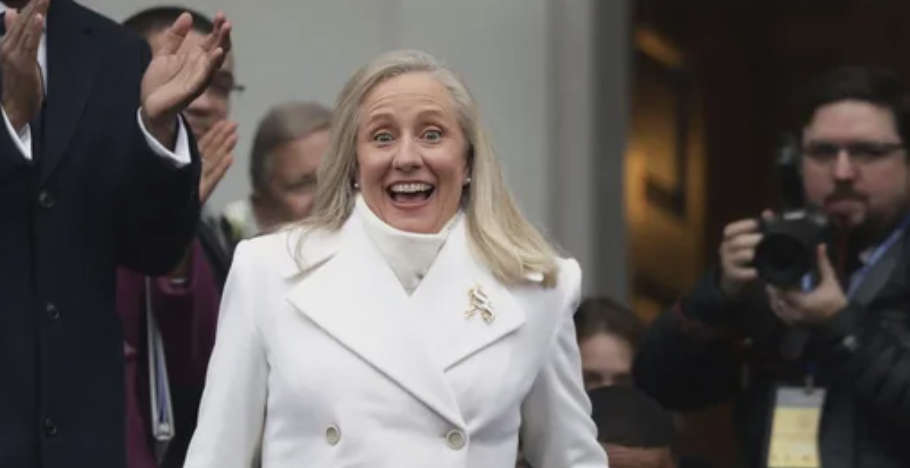
Prominent Democrats rallied behind the proposal, including Gov. Abigail Spanberger, Sens. Mark Warner and Tim Kaine, and former President Barack Obama. Many framed the redistricting as a response to Republican-led efforts in other states, arguing it was a way to counterbalance maps they see as tilted in the GOP’s favor. In campaign messaging, supporters emphasized that the change would be temporary and tied to broader national dynamics around redistricting.
Republicans, including former President Donald Trump and House Speaker Mike Johnson, urged voters to reject the measure. Trump joined a tele-rally ahead of Election Day, calling the proposal unfair and encouraging Virginians to vote against it.
The wording of the referendum itself focused on allowing the General Assembly to adopt new districts temporarily, with the state’s usual redistricting process set to resume after the 2030 census. Even so, the close result suggests a divided electorate, with many voters weighing concerns about fairness, representation, and the broader political stakes tied to control of Congress.