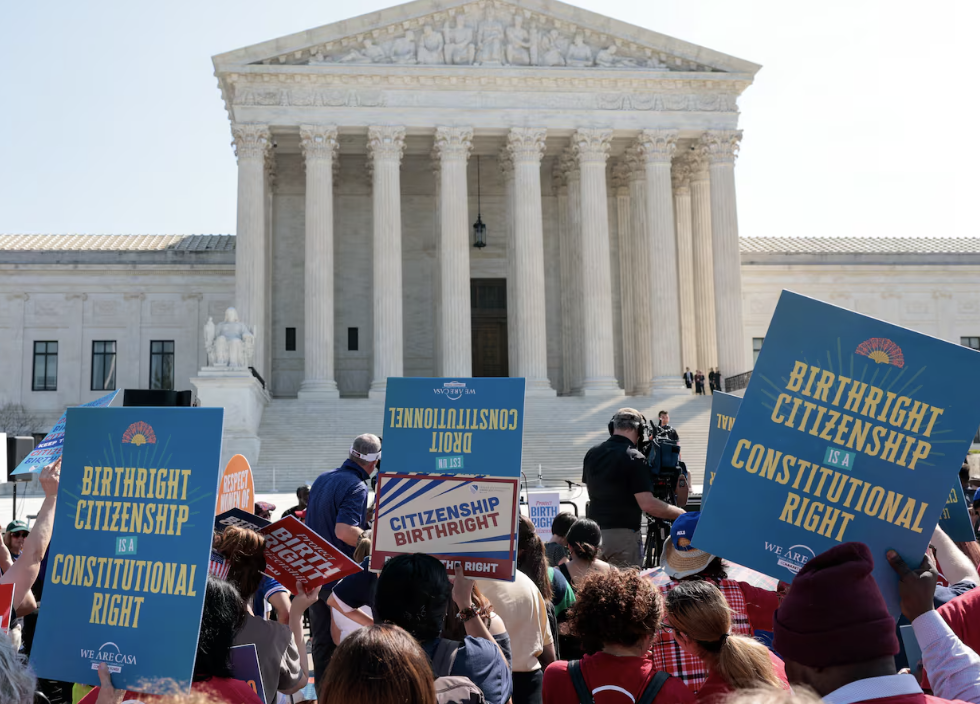
On April 1, the Supreme Court heard arguments in a case that could reshape how the United States understands citizenship. At issue is President Donald Trump’s executive order challenging birthright citizenship for children born in the U.S. to people in the country illegally. However, the court rules, the decision is likely to ripple through immigration policy, politics, and the broader economy.
Supporters of the order argue that the Constitution does not require automatic citizenship in these cases. They point to the 14th Amendment, which says that anyone born in the United States and subject to its jurisdiction is a citizen. The disagreement turns on that second condition. In their view, the phrase isn’t redundant. Being born on U.S. soil is only part of the test; the person must also fall fully under U.S. legal authority.
🇺🇸 Solicitor General Sauer told Chief Justice Roberts that “subject to the jurisdiction thereof” means illegal aliens still owe loyalty to their home country, not the U.S., so birthright citizenship shouldn’t apply to them.pic.twitter.com/WpKqZKjTLp https://t.co/2TSmdrdewY
— Mario Nawfal (@MarioNawfal) April 1, 2026
To understand that argument, they look back to the amendment’s origins. It was passed after the Civil War, largely to guarantee citizenship for formerly enslaved people and their children. Around the same time, Congress approved the Civil Rights Act of 1866, which described citizens as those born in the U.S. and not subject to any foreign power. Lawmakers at the time spoke in terms of allegiance, suggesting that citizenship was tied not just to geography but to political loyalty.
From that perspective, people who are in the country unlawfully still owe allegiance to another nation. Their children, the argument goes, fall outside the full jurisdiction described in the amendment. Critics of broad birthright citizenship also point to longstanding exceptions, like the children of foreign diplomats, who are not granted citizenship because their parents remain tied to another government.
Opponents of the executive order rely heavily on the Supreme Court’s 1898 decision in United States v. Wong Kim Ark, which recognized birthright citizenship for a man born in the U.S. to Chinese parents. But supporters of the current challenge argue that the case applies to families with a more permanent presence in the country, not to those here in violation of immigration law.
🚨🇺🇸 Trump sat in the Supreme Court yesterday for his own birthright citizenship case. 3 of the 9 justices were appointed by him. All of them expressed skepticism about his argument.
He left when the opposing lawyer started speaking.
Then posted “Kangaroo Court!!!” https://t.co/W0XK9cvUle pic.twitter.com/eDlLQkp6ED
— Mario Nawfal (@MarioNawfal) April 2, 2026
What’s clear is that the stakes extend well beyond legal theory. Immigration has already been a defining political issue, and this ruling could shape future migration patterns and public policy. Some warn that a broad reading of birthright citizenship could encourage more people to come to the U.S. with the expectation that their children will gain citizenship automatically. Others argue that limiting it would mark a sharp break from long-standing practice and raise difficult questions about rights and identity.
At its core, the case asks the court to decide what citizenship really means and who qualifies for it. However, if the justices rule, the decision will likely stand for decades, shaping not just immigration law but the country’s sense of itself.