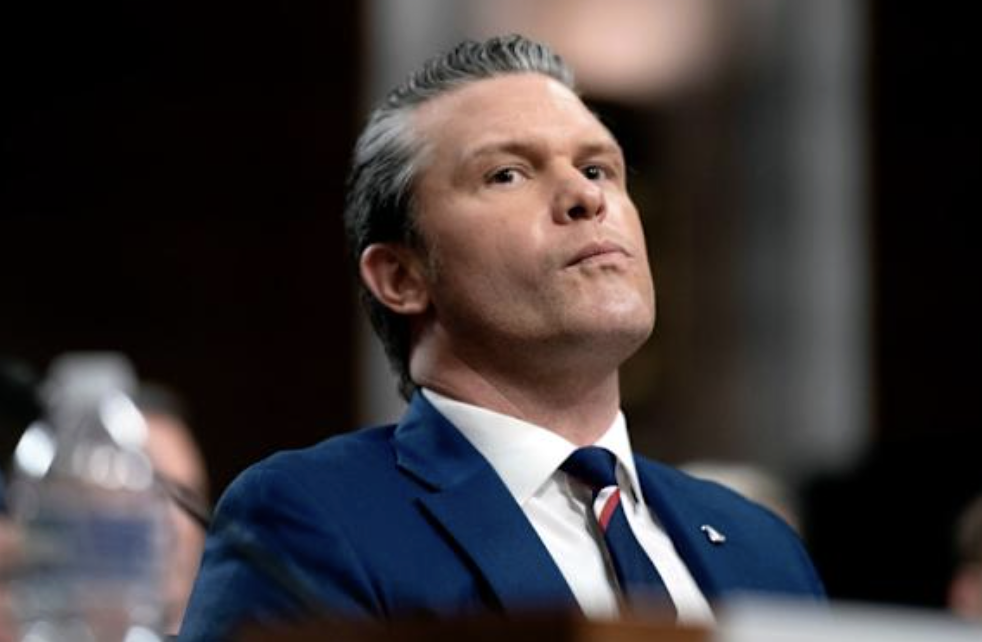
Defense Secretary Pete Hegseth faced a tense and often combative Senate hearing on Thursday, clashing with Democrats as he defended the administration’s military decisions and a massive proposed increase in defense spending.
Testifying before the Senate Armed Services Committee, Hegseth appeared alongside Joint Chiefs Chairman Gen. Dan Caine to make the case for President Trump’s $1.5 trillion defense budget for fiscal year 2027. But the hearing quickly turned into a broader debate over U.S. military actions, leadership decisions, and oversight concerns.
Sen. Jack Reed of Rhode Island, the committee’s top Democrat, opened with a sharp critique, noting that Hegseth had not testified publicly before the panel in nearly a year. He accused both Hegseth and President Trump of expanding U.S. military involvement abroad in ways he described as risky and far-reaching. Reed pointed to operations across multiple regions, including Iran and other countries, warning that those decisions could carry long-term consequences.
Hegseth pushed back forcefully. At one point, he argued that criticism from lawmakers was undermining U.S. efforts, calling out what he described as “defeatist” rhetoric. The exchange set the tone for much of the hearing, with Democrats using their time to press him on a range of issues.
Sen. Elizabeth Warren focused on financial concerns, questioning whether individuals may have benefited from well-timed trades linked to developments in the Iran conflict. She raised the possibility of insider knowledge influencing market activity, including trades tied to oil and defense sectors. Hegseth dismissed the suggestion, saying he had no involvement in such decisions and bluntly denied directing any related stock purchases.
Another major point of contention was Hegseth’s removal of senior military leaders during his tenure. Democrats argued that many of those dismissed were not let go for performance reasons, with Reed noting that a significant portion were women or minorities. Hegseth rejected that characterization, insisting that his decisions were based solely on merit, though he declined to discuss specific cases.
Even within his own party, there were moments of unease. Sen. Joni Ernst, a Republican from Iowa, questioned the handling of certain high-level departures, citing the records of two Army leaders whose retirements were accelerated. She said she had expected a different approach based on earlier discussions.
Lawmakers also raised concerns about the Pentagon’s use of artificial intelligence in military operations, especially amid tensions between the department and tech firms. Hegseth sought to reassure the committee, stating that AI systems are not being used to make lethal decisions.
Underlying the entire hearing was the administration’s push for a significant expansion of defense spending. Hegseth framed the proposed increase as necessary to rebuild what he described as a weakened defense industrial base and to strengthen the country’s ability to project power globally.
The ongoing situation with Iran also remained front and center. With a deadline approaching under the War Powers Act, some senators questioned whether the administration would seek congressional authorization for continued military involvement. Hegseth suggested that the current ceasefire could affect that timeline, indicating that the requirement might not apply in the same way while active hostilities are paused.