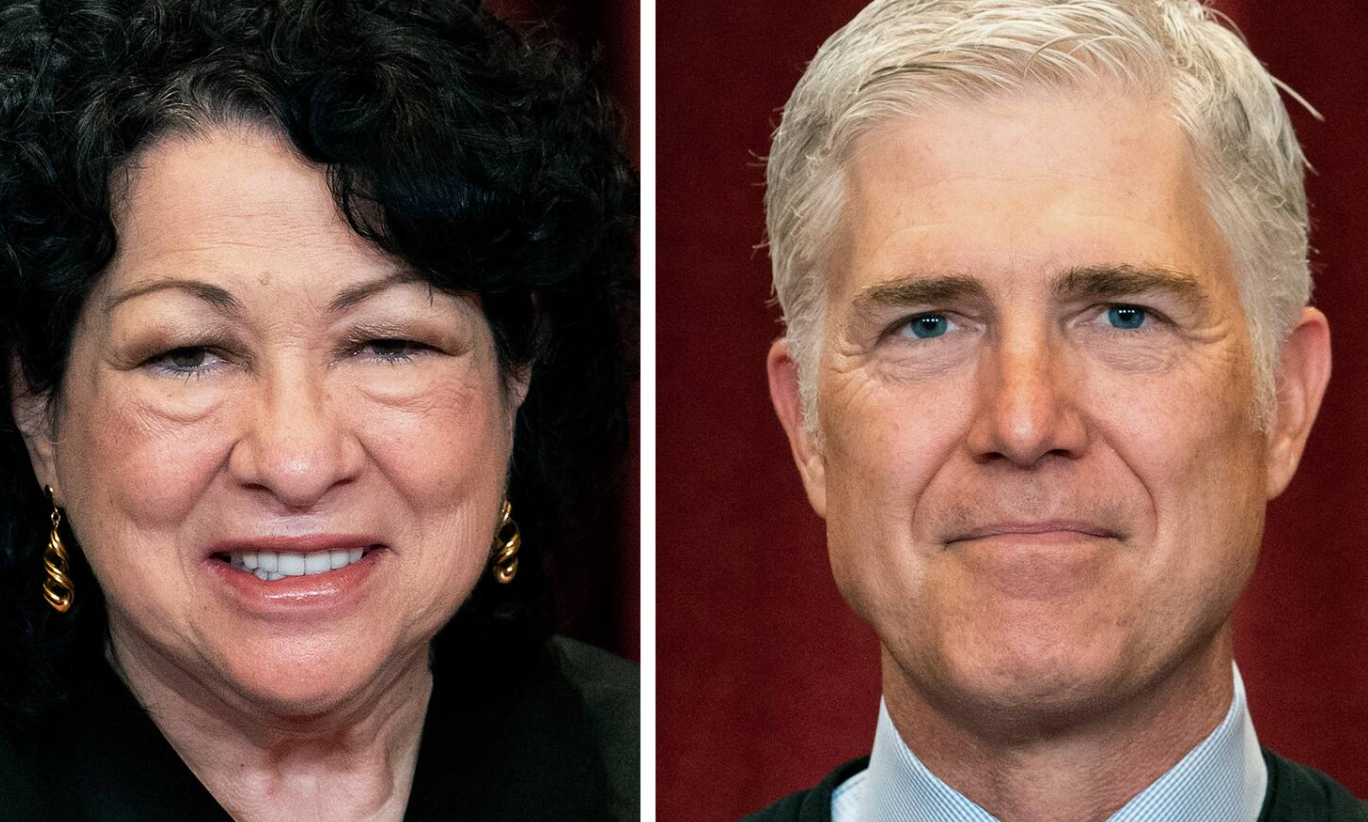
You expect the Supreme Court to split along strict liberal and conservative lines. You expect Justice Sotomayor to side with the left and Justice Gorsuch to side with the right. But the reality on the bench tells a different story. These two justices have joined forces nine times to argue that the government has gone too far. They write together to demand more protection for individual rights against state power.
According to Reason Magazine, the Court hears thousands of cases but picks fewer than 1% to review. It takes four votes to grant review. Sometimes, justices write opinions explaining why they think the Court should have taken a case. These are often solo efforts. Yet Sotomayor and Gorsuch have filed nine such opinions together. Eight were just for them. One included Justice Kagan. Every single one suggests the Court should move the law in a more government-restrictive direction.
A Strange Alliance Forms
This is not a new trend. In 2018, they blasted the Court for refusing to hear a case about forensic evidence and the right to cross-examine accusers. In 2019, they struck down a federal law for enhanced gun sentencing because it was too vague. Gorsuch wrote that when Congress enacts an unclear statute, courts must not create a new, clearer law to replace it under the Constitution but instead declare the statute void and urge Congress to try again.
They have also agreed in multiple Fourth Amendment cases. In 2021, Sotomayor joined a decision that counted shooting a fleeing suspect as a seizure. Gorsuch dissented in that specific case, but the pattern of agreement on liberty issues remains strong. They find common ground when the government tries to expand its power without clear rules.
Protecting Property and Freedom
The latest example involves a dispute over property rights. Per Reason Magazine, the Supreme Court declined to hear a case challenging a rule that property destroyed during police action is immune to compensation claims. Sotomayor, joined by Gorsuch, argued this rule might be unconstitutional. They noted that when the government directly takes property to pay a debt, the state’s police power might not be enough to avoid paying just compensation.
They have also looked at issues like vehicle forfeiture for unpaid parking tickets. They asked if someone could face punishment for being discovered in the United States a second time when a release order prohibited them from exiting a particular district. They asked if the Fourth Amendment forbids warrantless arrests for minor crimes that happen when the officer is not present.
This alliance shows that the Constitution is not a tool for one side to use against the other. It is a shield for everyone. When the government overreaches, these justices push back. They force the other branches to write clearer laws. They demand that the state pay for what it takes. Their joint voice proves that liberty often requires a mix of legal philosophies to survive.
This matters because the government is always looking for a way to expand. It wants to keep more money. It wants to seize more property. It wants to punish without clear rules. When the Court ignores these cases, the rules get worse. But when Sotomayor and Gorsuch speak up, they remind the system that the Bill of Rights still applies.