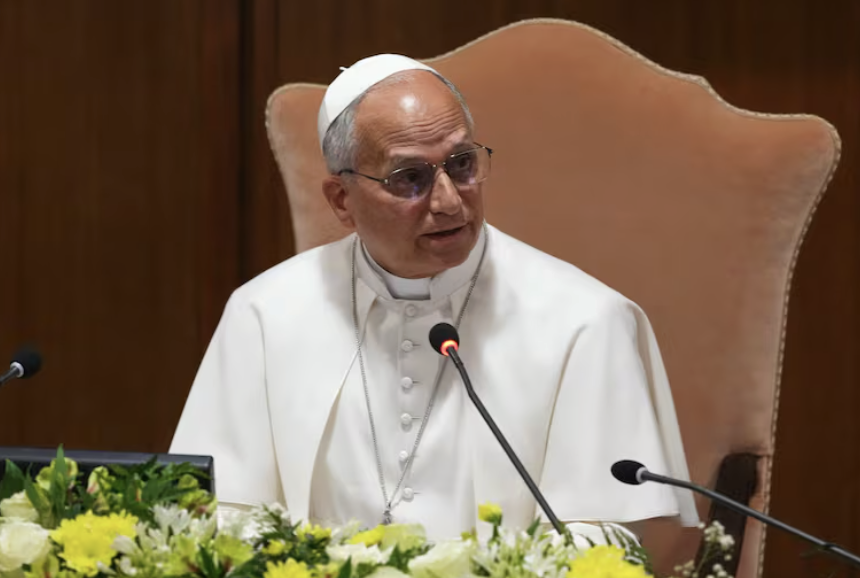
Pope Leo XIV has placed the Catholic Church squarely in the middle of one of the defining debates of the modern era: whether artificial intelligence will ultimately serve humanity or diminish it. In his sweeping encyclical Magnifica Humanitas, the first U.S.-born pope argues that AI cannot be guided primarily by corporate ambition, military competition, or profit motives. Instead, he insists that human dignity, moral responsibility, and the common good must remain at the center of technological development.
The document arrives at a moment when AI systems are rapidly expanding into nearly every area of life, from medicine and education to warfare, entertainment, and employment. Leo warns that without strong ethical guardrails, these systems could deepen conflict, spread misinformation, and weaken humanity’s ability to distinguish truth from manipulation.
His concern is not only about the technology itself but also about the people and institutions controlling it. According to the pope, the danger lies in a “culture of power” where governments and corporations race to build increasingly sophisticated AI tools with little regard for long-term social consequences.
One of the strongest sections of the encyclical addresses the use of AI in warfare. Leo states clearly that irreversible decisions about human life should never be delegated to machines. By condemning autonomous lethal systems, he draws a moral line against allowing algorithms to determine who lives and dies. This position places him in direct tension with political leaders and technology companies pushing for deregulation and faster innovation in the AI sector. The pope’s warning reflects growing global concerns about autonomous weapons and the possibility that AI-driven warfare could make conflicts easier to start and harder to control.
Leo also frames the AI revolution through a spiritual and historical lens. Referencing the biblical story of the Tower of Babel, he argues that humanity risks becoming obsessed with technological power and uniformity at the expense of wisdom, humility, and human connection.
Pope Leo XIV cited the sudden rise in AI and fast-booming technologies for his name choice as the Roman Pontiff. https://t.co/Y3YR5Jd8mV
— Breitbart News (@BreitbartNews) May 11, 2025
In the biblical account, people sought to build a tower that would elevate them to divine status. The pope suggests modern society faces a similar temptation through AI: the desire to centralize knowledge, automate human judgment, and place too much faith in systems designed by flawed human beings.
At the same time, the encyclical is not entirely anti-technology. Leo acknowledges that AI has enormous potential to improve lives, expand access to information, and solve difficult problems. However, he insists these benefits must be balanced against ethical responsibilities. Technology, he argues, should assist humanity rather than replace it. That distinction is especially important as fears grow over AI replacing workers, reducing human creativity, and reshaping economies faster than societies can adapt.
The response from academics, religious thinkers, and members of the technology industry suggests the document could become a major reference point in future AI debates.
Microsoft executive Taylor Black noted that the rise of AI is forcing many people to reconsider what it actually means to be human. That question sits at the heart of Leo’s message. The pope is ultimately arguing that human worth cannot be measured by efficiency, productivity, or data processing power.
Magnifica Humanitas may prove to be one of the defining documents of Leo XIV’s papacy because it addresses a challenge that crosses national, political, and religious boundaries. Rather than treating AI as merely a technical issue, the pope frames it as a moral and human one. His message is that innovation without ethics risks leading society toward greater inequality, conflict, and dehumanization. Whether policymakers and technology leaders listen remains uncertain, but the encyclical has already established itself as a serious contribution to the global conversation about humanity’s future alongside artificial intelligence.