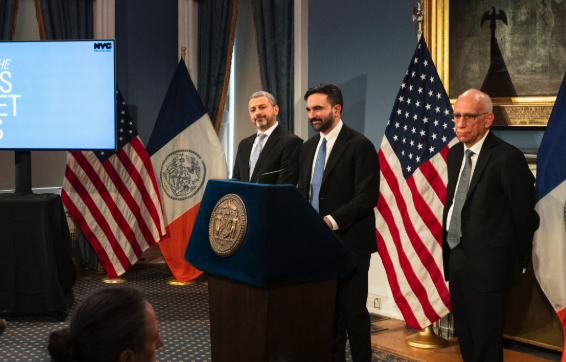
On the eve of New York City Mayor Zohran Mamdani’s first preliminary budget rollout, Gov. Kathy Hochul delivered what amounted to a $1.5 billion assist from state taxpayers. Within hours, the mayor returned the favor — by detonating a political standoff that could define New York’s fiscal future.
Despite the infusion of state aid, Mamdani announced the city is staring down a “historic” $5.4 billion budget gap. And according to the mayor, there are only two ways forward.
The first path: Albany grants New York City the authority to raise income taxes on what Mamdani described as the “ultra-wealthy” and the most profitable corporations. Hochul has repeatedly rejected that proposal, citing concerns about competitiveness and the fragility of the state’s tax base.
The second path: a 9.5% property tax increase.
If enacted, it would mark the city’s first property tax hike in 23 years — and the second largest in at least four decades. The impact would extend beyond homeowners. Experts warn it would reverberate through the commercial real estate market and add pressure to rent-regulated apartment owners already struggling with rising costs and stagnant revenue.
🇺🇸 MAMDANI PROPOSES PROPERTY TAX HIKE IN NYC WHILE SPENDING MILLIONS ON EQUITY OFFICES
New York City’s proposed budget is $127 billion, and it could come with up to a 9.5% property tax hike for homeowners if the state doesn’t raise taxes on the wealthy.
At the same time, the… pic.twitter.com/TtsbMpvpLB
— (news) DOGE (@DOGE__news) February 19, 2026
Conspicuously absent from Mamdani’s roadmap is a third option: reducing spending in his proposed $127 billion budget.
The new spending plan exceeds former Mayor Eric Adams’ last budget projection by billions. Mamdani has argued the increase reflects a more realistic accounting of rising expenses that prior administrations allegedly underbudgeted. At the same time, his economic projections assume New York’s economy will outpace national GDP growth over the next four years — even as job growth has slowed.
Independent fiscal monitors project lower revenue than City Hall anticipates. That leaves limited room for error, particularly as Mamdani forecasts a $6.6 billion gap the following year and cumulative shortfalls of $20 billion between fiscal 2028 and 2030.
More here 👉️ https://t.co/1GV38DQqVf | NYC Mayor Zohran Mamdani’s ‘last resort’ proposal to raise property taxes by 9.5% to close a more than $5 billion budget gap is facing pushback from local leaders and small business owners. Meanwhile, Mamdani repeated his call for higher… pic.twitter.com/WojaRQNJQN
— Eyewitness News (@ABC7NY) February 19, 2026
Even if Albany were to approve higher income taxes on top earners — and even if Wall Street remains strong — structural deficits would remain.
One major cost driver traces back to a 2022 state mandate requiring smaller class sizes, enacted as public school enrollment declines. Analysts estimate repealing or modifying that law and updating the school-aid formula could generate savings exceeding $1 billion annually.
Another flashpoint: health care obligations for city workers. A 2018 agreement under then-Mayor Bill de Blasio required labor unions to find $1 billion in savings to shore up the city’s Health Insurance Stabilization Fund. Those savings never materialized. The fund is now insolvent. Mamdani has moved the obligation onto the city’s budget at a cost of $2 billion over two years, partially offset by a new labor agreement shifting workers to a less expensive plan — though it continues to offer coverage without co-pays.
Mamdani’s high-minded Leftist IDEOLOGY: Tax the rich until they’re poor, instead of cutting ridiculous giveaway programs. Unreal!
Mamdani Asked Point Blank: ‘Would You Really, When Push Comes To Shove, Raise The Property Taxes?’ https://t.co/nePjJ5yWyE— carla contini (@carlacontini5) February 19, 2026
Politically, the stakes are high for Hochul. In a statewide election year, Mamdani’s framing leaves the governor exposed: if property taxes rise, City Hall suggests Albany bears responsibility for blocking alternative revenue options.
Meanwhile, the Working Families Party — closely aligned with Mamdani — has left open the possibility of backing a stronger challenger to Hochul. As activists prepare to descend on Albany to lobby for higher taxes on top earners, what began as a routine budget rollout is shaping into a broader battle over taxation, spending, and the future of New York’s economic base.
Mamdani may have seized the headlines. Whether that translates into long-term fiscal stability — or a deeper political fracture — remains to be seen.