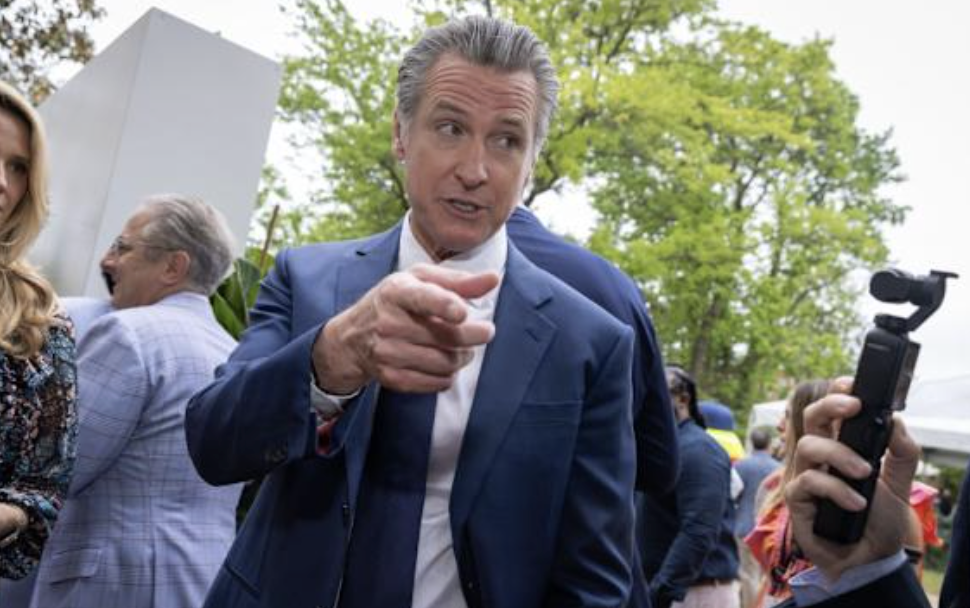
California Gov. Gavin Newsom found himself in an uncomfortable spot over the weekend after a joking social media post about Donald Trump was quickly overshadowed by a shooting at the White House Correspondents’ Dinner.
Before the event, Newsom’s press office took a swipe at the president in a post on X, referring to him as “Little D” and making a jab about him finally seeing a “mentalist.” The comment was a reference to Oz Pearlman, a performer known for his mind-reading acts, who had been entertaining guests ahead of the dinner. The post leaned into a mocking tone, with Newsom’s team suggesting Pearlman might be able to “work miracles” on others in attendance as well.
At the time, the remarks were in line with Newsom’s recent approach online. Over the past year, he has adopted a sharper, more combative style when talking about Trump and other political opponents, often mirroring the kind of rhetoric Trump himself has used. The strategy has drawn attention, especially as speculation continues about Newsom’s potential ambitions in the 2028 presidential race.
But the mood shifted abruptly later that evening when gunfire broke out at the Washington Hilton, where the dinner was being held. Authorities say a man identified as 31-year-old Cole Thomas Allen attempted to force his way into the ballroom, where Trump, Vice President JD Vance, and other officials were present. He allegedly opened fire before being subdued by law enforcement.
Investigators say Allen had circulated a manifesto beforehand that outlined his hostility toward Trump and members of his administration. In it, he referenced a range of political grievances and framed his actions as a response to policies he opposed.
In the aftermath, Newsom struck a much different tone. Posting from his official account, he said he was relieved that early reports indicated those at the event were safe. He also emphasized the importance of a free press and made clear that violence has no place in political life.
The contrast between the earlier post and the later statement didn’t go unnoticed. Critics argued that rhetoric like Newsom’s contributes to a political climate that can escalate tensions, with some suggesting that repeated attacks on Trump risk encouraging extreme behavior. Others on the right made similar claims, tying broader criticism of Trump to a pattern of threats against him.
Democrats pushed back on that idea. State Sen. Scott Wiener dismissed any direct connection between political criticism and acts of violence, arguing that calling out a president’s policies or leadership does not incite attacks.
Former House Speaker Nancy Pelosi also weighed in, focusing on the human impact of the event. She said she was relieved that those at the dinner were safe and expressed concern for the injured officer, noting her own family’s experience with political violence.
As the investigation continues, the episode has added another layer to an already tense political environment, where sharp rhetoric and real-world consequences are increasingly colliding.