In a rare break from party lines, five Senate Republicans joined Democrats on Tuesday to pass a symbolic resolution opposing President Donald Trump’s tariffs on Brazil. The final vote was 52 to 48, highlighting a small but noticeable divide inside the GOP when it comes to trade policy under the current administration.
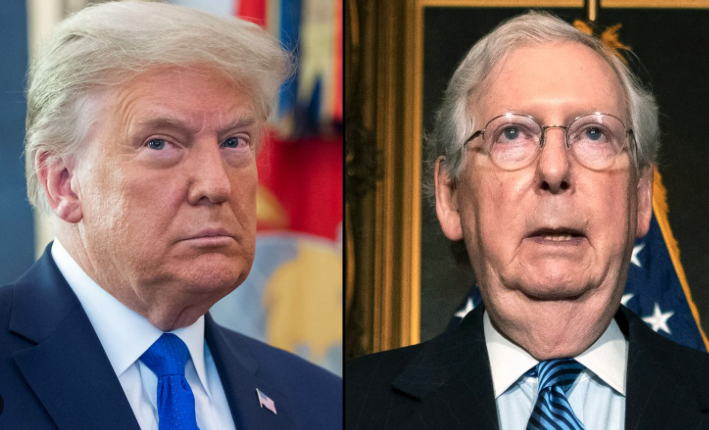
Senators Susan Collins of Maine, Mitch McConnell and Rand Paul of Kentucky, Lisa Murkowski of Alaska, and Thom Tillis of North Carolina voted with Democrats, signaling concern over the long-term impact of tariffs on the American economy and global trade relationships.
Senate Minority Leader Mitch McConnell explained his decision, warning about what he sees as the hidden cost of tariffs. “Protectionists eagerly celebrate the revenue from tariff duties,” McConnell said. “But they don’t talk nearly as much about how much of that revenue they’ll spend protecting American growers and producers from the avoidable harm of their policies.” McConnell also referred to former President Ronald Reagan’s support for free trade, pushing back on efforts to use Reagan’s name to support current tariff strategies.
🚨 JUST IN: US Senate votes to TERMINATE President Trump’s 50% tariffs on Brazilian imports, 52-48
REPUBLICANS who voted to reverse Trump’s actions: Mitch McConnell, Thom Tillis, Rand Paul, Lisa Murkowski and Susan Collins.
Would still need to pass the HOUSE, which isn’t… pic.twitter.com/Kgdek7RyLN
— Eric Daugherty (@EricLDaugh) October 28, 2025
The vote comes as President Trump continues to aggressively pursue a new trade strategy that many call a bold shift from decades of U.S. trade policy. Earlier this year, the president announced a broad set of tariffs starting at 10% on nearly all imports. Brazil, in particular, was hit with the threat of tariffs as high as 50% following the alleged mistreatment of former Brazilian President Jair Bolsonaro, who was sentenced to 27 years in prison. Bolsonaro, a right-leaning figure, was allegedly targeted by Brazil’s leftist government for trying to overthrow democracy—an accusation his supporters strongly deny.
Vice President J.D. Vance attempted to rally Republican senators behind the president ahead of Tuesday’s vote. “The point that I made to my Republican colleagues, recognizing there’s a diversity of opinions about it, is that the tariffs give us the ability to put American workers first,” Vance said, according to the Daily Wire. “They force American industry to reinvest in the United States of America instead of a foreign country.”
Still, despite Vance’s message, some Republicans decided to take a stand—albeit on a resolution that doesn’t carry legal weight. The Senate’s action is considered symbolic. It is not expected to get a vote in the House of Representatives, where the Republican majority has remained more unified behind Trump’s economic agenda.
Trump has leaned on the International Emergency Economic Powers Act (IEEPA) to justify his sweeping use of tariffs. The law, which gives presidents broad authority to act during national emergencies, is currently under review by the U.S. Supreme Court. If the Court rules against Trump’s use of the IEEPA, it could restrict future presidents from using the same trade powers without congressional approval.
The president has warned that such a decision would harm the country’s economic strength. “If we lose that case,” Trump said earlier this year, “the United States will be a weakened, troubled, financial mess for many, many years to come.”
Before Trump’s new tariffs were introduced, Brazil already maintained significantly higher tariffs on U.S. goods—about 11%—compared to the U.S. average of 3% on Brazilian imports. That imbalance is one reason Trump supporters say the new measures are necessary to level the playing field.
While the split among Senate Republicans shows some discomfort with the administration’s tactics, it doesn’t appear to signal a broader rebellion within the party. Most Republicans continue to back the president, especially as his policies aim to revive U.S. manufacturing, protect American jobs, and increase leverage on the world stage.
Even with some dissent, President Trump’s approach to tariffs and trade continues to shape the conversation in Washington, with more votes expected later this week.