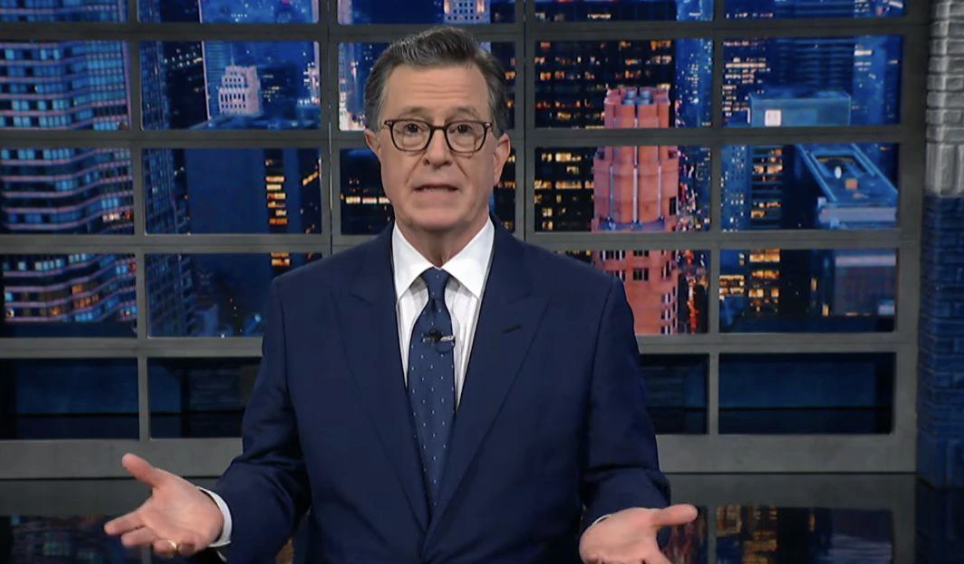
CBS is offering a more detailed explanation for its decision to end The Late Show with Stephen Colbert, revealing that the long-running late-night program was reportedly losing about $40 million annually.
The network had previously said the decision was based on financial considerations, but a new statement sheds light on just how significant those losses had become. While speculation has swirled about whether ratings, politics or creative direction played a role, CBS continues to maintain that the move was driven by economics rather than any dissatisfaction with Colbert’s performance.
When the network first announced that The Late Show would end after 10 seasons under Colbert, executives emphasized that the decision was not a reflection on the host. Colbert, who took over the franchise in 2015 following David Letterman’s retirement, became one of the most recognizable figures in late-night television and consistently generated headlines through his interviews and political commentary.
Colbert himself has confirmed that he was not being replaced by another host. Instead, CBS has opted for a completely different programming strategy in the time slot.
Beginning after The Late Show’s final episode aired, the network filled the hour with back-to-back syndicated comedy programs hosted by media entrepreneur Byron Allen. The first program, Comics Unleashed, premiered in the slot on May 22, one day after Colbert’s farewell broadcast. It is followed by another Allen-produced series, Funny You Should Ask, which airs later in the overnight schedule.
The key difference lies in the business model.
Unlike traditional network programming, Comics Unleashed operates under a “time buy” arrangement. In this setup, Allen pays CBS for the right to air the show rather than receiving compensation from the network. According to reports, Allen is paying approximately $15 million annually for the time slot while retaining the advertising revenue generated by the program.
CBS says that arrangement dramatically changes the economics of late-night programming.
“We’re proud to partner with Byron Allen on a new business and programming model for late night that proactively addresses a network daypart that was cost-prohibitive to continue,” the network said in a statement provided to Deadline. “With this ‘time buy’ model, we have shifted an hour that was losing roughly $40 million annually to $15 million in profit — a $55 million swing.”
That figure offers a rare glimpse into the financial pressures facing traditional late-night television. While the format once generated substantial advertising revenue and served as a major cultural touchstone, changing viewing habits have transformed the landscape. Audiences increasingly consume clips online rather than watching full broadcasts, while streaming services, podcasts, and social media compete for attention that once belonged almost exclusively to network television.
Those shifts have forced broadcasters to reevaluate expensive productions that require large staffs, elaborate studio operations, and high-profile talent contracts.
For CBS, replacing a costly network production with a guaranteed revenue arrangement appears to have been an easy financial calculation. A program that was reportedly losing tens of millions of dollars each year has been replaced with one that immediately generates profit for the network without requiring the same level of investment.
Whether CBS’s experiment with the time-buy model becomes a blueprint for other networks remains to be seen. For now, however, the company appears convinced that the financial benefits outweigh the risks, turning what it describes as a $40 million annual loss into a profitable venture worth roughly $15 million a year.