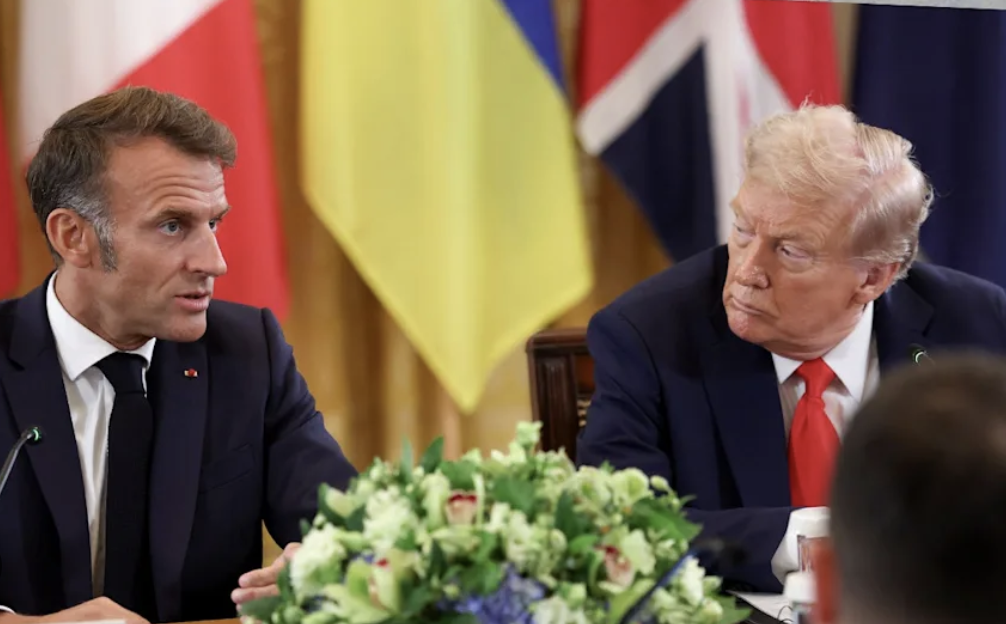
French President Emmanuel Macron is facing renewed criticism as the United States prepares to host rare talks between Israel and Lebanon, with France notably absent from the process.
The meeting, set to take place in Washington at the ambassador level, is being brokered by President Donald Trump as part of a broader effort to stabilize tensions tied to the ongoing conflict involving Iran and its regional allies. Secretary of State Marco Rubio is expected to host representatives from both countries, marking a potentially significant diplomatic step between two nations that do not have formal relations.
France, which historically held influence in Lebanon during its mandate period, is not expected to participate. According to reporting from The Jerusalem Post, Israel requested that France be excluded from the talks. An Israeli official cited frustration with France’s recent approach, particularly its opposition to Israeli military actions tied to Iran and what Israel sees as a lack of meaningful pressure on Lebanon to confront Hezbollah.
Hezbollah, the Iran-backed militant group based in Lebanon, remains central to the tensions. The group entered the conflict earlier this year after launching rockets into Israel following joint U.S.-Israeli strikes on Iran. Despite this escalation, Macron has continued to call for restraint, urging Israel to halt attacks on Hezbollah positions and pushing for Lebanon to be included in ceasefire arrangements.
That stance has drawn criticism from some Israeli officials and analysts. Yosef Kuperwasser, a former Israeli military intelligence official, argued that Macron’s position risks undermining Lebanon’s long-term stability by failing to address Hezbollah’s role. He and others have said that any lasting progress would require concrete steps by Lebanon to limit or disarm the group, rather than relying on diplomatic statements alone.
Trump: We can’t let a country blackmail or extort the entire world pic.twitter.com/gi8BtNrvtT
— Acyn (@Acyn) April 13, 2026
France’s broader policy toward Hezbollah has also come under scrutiny. Unlike several other Western countries, France does not designate the group in its entirety as a terrorist organization, instead distinguishing between its political and military wings. Critics argue that this distinction is outdated, as Hezbollah itself does not separate its activities in that way.
Inside France, some political figures have voiced similar concerns. European Parliament member François-Xavier Bellamy recently called for a shift in policy, saying France should stop treating Hezbollah as a legitimate political actor. Past reports of Macron engaging with Hezbollah-linked officials have also fueled debate over whether France’s approach has blurred important lines.
French officials, for their part, have emphasized their focus on de-escalation. A diplomat told The Times of Israel that France’s priority is ending Israeli military operations in Lebanon, while also supporting the authority of the Lebanese state. French Foreign Ministry spokesperson Pascal Confavreux has said Iran must stop using Hezbollah to target Israel, while also arguing that Lebanon should be included in ceasefire discussions.
The upcoming talks themselves may be limited in scope. Some regional analysts note that holding them at the ambassador level suggests expectations for a breakthrough remain modest. There are also signs of internal political tensions within Lebanon, where Hezbollah continues to exert influence despite growing public frustration.
As the situation develops, Macron’s role—and France’s broader position in the region—appears to be under increasing scrutiny, particularly as the United States takes a more direct lead in shaping the next phase of diplomacy.