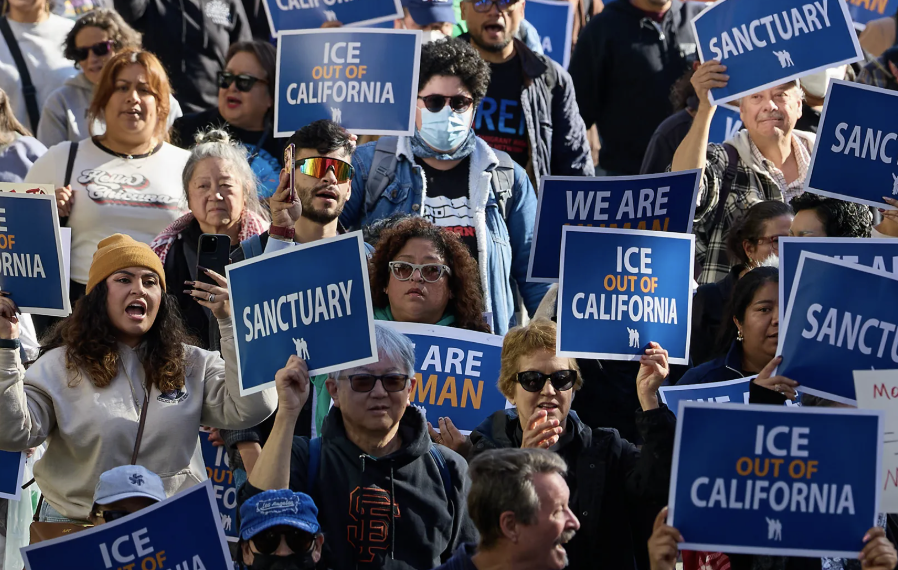
Democrats in states across the country are pushing hundreds of bills designed to limit or challenge President Donald Trump’s immigration enforcement agenda, setting up a growing conflict between state governments and the federal government.
According to a review by the progressive organization State Futures, lawmakers have introduced 242 immigration-related bills in 32 states. Roughly one-fifth of those proposals have already become law. The measures vary by state, but many are aimed at restricting how federal immigration authorities operate within state and local jurisdictions.
Some of the bills would prohibit federal law enforcement officers from wearing masks while carrying out enforcement actions. Others would prevent federal agencies from using certain undercover license plates or restrict Immigration and Customs Enforcement officers from using state-owned property. Additional proposals are intended to make it harder for federal officials to establish or expand immigration detention facilities.
The legislation has received strong support from Democratic lawmakers in several states, although the response has not been uniform. Some Democratic governors have vetoed immigration-related measures after concluding that they went too far or could create legal and practical problems. The federal government has also challenged a number of these policies in court, arguing that states cannot interfere with the enforcement of federal immigration law.
.@DHSGenCounsel on activist judges: “What’s going on with some of these District Judges is absolutely ABSURD…what these judges are doing is engaging in naked politics and then they’re shrouding it in the thin veneer of legalese.” https://t.co/75hxmGcMaL pic.twitter.com/UxAFOknoX0
— Homeland Security (@DHSgov) July 30, 2026
State Futures reported that 53 of the bills have passed in 17 states. Many of those laws are now facing legal challenges or are expected to undergo further judicial review. The disputes raise broader constitutional questions about how much authority states have to regulate the conduct of federal immigration officials working within their borders.
At the same time, immigration advocacy organizations have increasingly turned to the courts to challenge the Trump administration’s deportation and detention policies. Breitbart News reported that pro-amnesty and immigrant-rights groups have been involved in thousands of lawsuits seeking to block or delay immigration enforcement actions.
Supporters of the administration argue that the legal challenges amount to a coordinated effort to frustrate policies voters supported in the 2024 election. Critics of the administration, however, maintain that lawsuits are a legitimate way to test whether federal enforcement practices comply with constitutional protections and existing immigration law.
it is a bit crazy how overwhelmingly democratic BigLaw is. like there is not a single super prestigious firm where even a significant percent of donors are republicans. pic.twitter.com/DmGySst4Ul
— kicole nidman (@ferald_gord) August 15, 2026
Court rulings have varied significantly depending on the judge and the facts of individual cases. Data cited in the report showed that judges appointed by presidents from both parties have ruled against ICE detention decisions at relatively high rates in some categories. That complicates the argument that the disputes can be explained entirely by partisan judicial appointments.
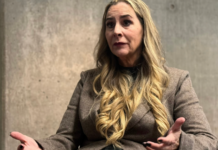
James Percival, general counsel for the Department of Homeland Security, has accused opponents of using repeated lawsuits and favorable district court rulings to delay the administration’s policies. From the administration’s perspective, the volume of litigation is itself part of the strategy.
The larger fight is likely to continue as states test the limits of their authority and the Trump administration presses ahead with expanded immigration enforcement. With dozens of new laws already in place and many more proposals still moving through state legislatures, immigration policy is increasingly becoming a legal battle fought not only in Washington, but also in state capitals and federal courts across the country.