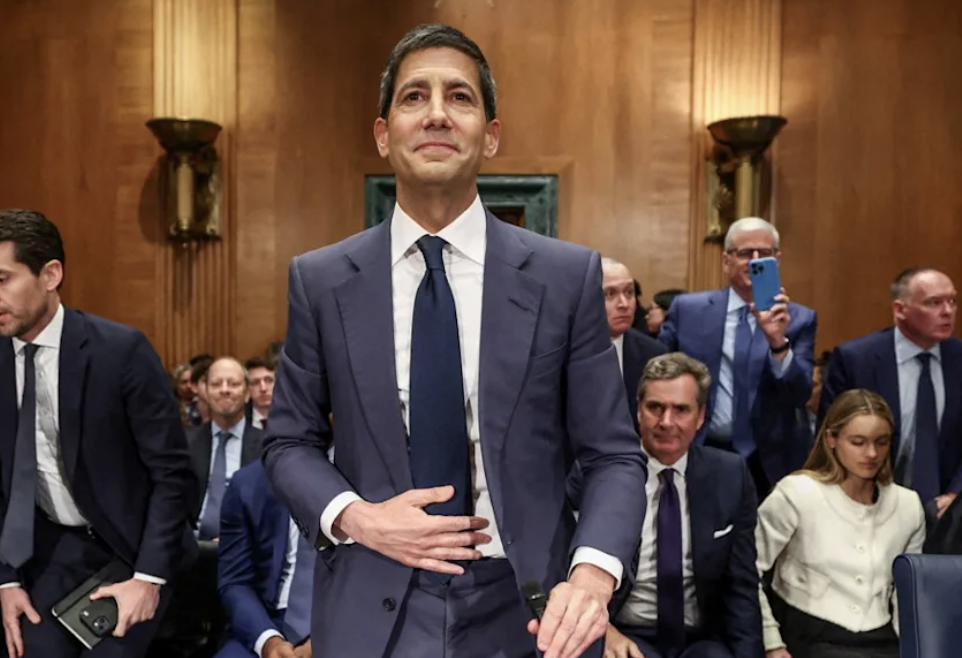
Kevin Warsh was confirmed Wednesday as the next chairman of the Federal Reserve, stepping into one of the most difficult economic environments the central bank has faced in years as inflation accelerates and political pressure over interest rates intensifies.
The Senate voted 54-45 to confirm President Trump’s nominee, with Sen. John Fetterman of Pennsylvania emerging as the lone Democrat to support Warsh’s elevation to the Fed’s top job. The chamber had already approved Warsh to a 14-year term on the Federal Reserve Board of Governors a day earlier in a narrower 51-45 vote.
Warsh is expected to officially replace outgoing Chair Jerome Powell by the end of the week. He inherits an economy where inflation is once again moving in the wrong direction, creating a difficult balancing act for the central bank as President Trump continues demanding lower borrowing costs to boost economic growth.
Fresh inflation data released this week showed consumer prices rose 3.8% in April compared to a year earlier, marking the highest annual inflation reading since the middle of 2023. The figure represented a sharp jump from March’s 3.3% increase and renewed concerns that inflation pressures are becoming more entrenched.
Core inflation, which excludes volatile food and energy costs, climbed 2.8% year over year, while the Fed’s preferred inflation gauge — core personal consumption expenditures — remains above 3%.
“The Fed has a predicament,” Derek Reisfield, co-founder and original chairman of MarketWatch, told The Post. “While there is a lot of pressure to lower rates, typically in a rising inflation environment, the Fed would be hesitant to lower rates. That might fuel inflation more.”
Much of the recent inflation surge has been tied to geopolitical turmoil in the Middle East, particularly disruptions surrounding the Strait of Hormuz amid the Iran conflict. Rising oil prices and supply chain disruptions have driven up costs across several sectors of the economy.
“These are all basic supply inputs to a ton of things, like fertilizer, computer chips, etc.,” Reisfield said. “So everything that relies on those inputs, which is pretty much everything in our economy, is going to cost more.”
Warsh enters the position after years of criticizing the Federal Reserve’s response to the pandemic, particularly the era of ultra-low interest rates and aggressive monetary stimulus that followed. During his Senate confirmation hearing last month, he argued the Fed damaged its credibility by keeping monetary policy too loose for too long after the COVID crisis.
“The inflation surge … we’re still living with,” Warsh told lawmakers while criticizing the central bank’s 2020 policy framework overhaul.
He has also pushed back against the Fed’s practice of heavily signaling future rate decisions to financial markets, arguing policymakers need greater flexibility.
“We need central bankers who are humble, who are nimble, who are open-minded, who can react,” Warsh said during testimony before senators.
At the same time, Warsh has recently argued that advances in artificial intelligence and productivity gains could eventually ease inflation pressures over the long term, potentially creating room for lower interest rates later on.
Still, some economists believe Wall Street may be underestimating how aggressive the Fed could ultimately become if inflation continues climbing.
Skanda Amarnath, executive director of Employ America and a former Fed economist, said inflation has consistently come in hotter than expected for months.
“Even the more flattering inflation measures Warsh pointed to at his confirmation hearing are now turning the other way,” Amarnath told The Post.
He added that the debate inside financial markets may soon shift dramatically.
“The debate now is why or why not hike — not why or why not cut,” Amarnath said, suggesting another rate increase may eventually become necessary if inflation remains stubbornly high.
That possibility could quickly place Warsh on a collision course with President Trump, who has repeatedly attacked Jerome Powell for refusing to slash rates more aggressively.
Complicating matters further, Powell is expected to remain on the Federal Reserve Board even after his term as chairman expires Friday. His decision to stay is partly tied to lingering fallout from the Fed’s controversial headquarters renovation project, which sparked a Justice Department investigation into whether Powell misled Congress about ballooning renovation costs.
Although prosecutors dropped the criminal inquiry, Powell has said he wants to remain at the Fed until the matter is fully resolved and the institution’s independence is protected from political pressure.
The unusual arrangement could create internal tensions as Warsh begins reshaping monetary policy while Powell still remains inside the central bank during a period of mounting economic uncertainty.