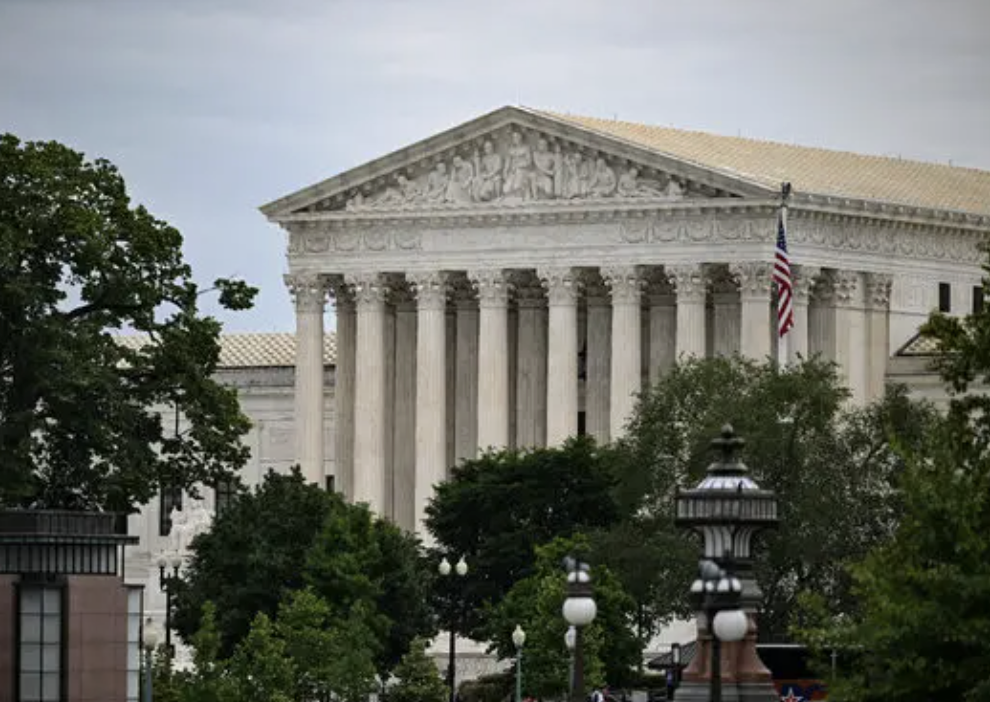
The U.S. Supreme Court handed Alabama Republicans a significant victory on Tuesday, allowing the state to use a congressional map that is expected to favor GOP candidates in upcoming elections.
In an emergency order, the Court approved Alabama’s appeal to use a congressional map adopted by the state legislature in 2023. The map includes one majority-Black district and will be used for this election cycle. The Court’s three liberal justices dissented from the decision.
The ruling marks the latest development in a lengthy legal dispute over Alabama’s congressional boundaries. Republican leaders have argued that the state’s map follows traditional redistricting principles, while voting rights advocates contend it weakens the influence of Black voters.
Last month, the Supreme Court vacated a lower court decision that had blocked Alabama’s 2023 map and instructed the lower court to reconsider the case. However, a three-judge federal panel later ruled that the map could not be used and ordered the state to continue using a court-drawn map containing two districts where Black voters either form a majority or have a meaningful opportunity to elect their preferred candidates.
Tuesday’s order reverses that outcome for now, allowing Alabama to proceed with its 2023 congressional map.
Alabama Gov. Kay Ivey praised the decision and confirmed that the state’s Aug. 11 special primary election will be conducted under the legislature’s map.
“The U.S. Supreme Court confirmed what I have said all along and that is that Alabama knows our state, our people and our districts best,” Ivey said in a statement.
She described the ruling as a victory for Alabama voters and argued that elected officials, rather than outside groups, should have the final say in how districts are drawn.
The case comes amid a broader national debate over congressional redistricting. President Donald Trump has encouraged Republican-controlled states to revisit congressional maps following the Supreme Court’s Callais decision, which placed limits on the use of race in redistricting decisions.
In its unsigned opinion, the Court said Alabama had demonstrated that it could suffer irreparable harm if the lower court’s ruling remained in place. The justices also pointed to concerns about changing election rules close to an election date.
“We have repeatedly cautioned that lower federal courts should not alter the election rules on the eve of an election,” the majority wrote.
Justice Sonia Sotomayor sharply disagreed. In her dissent, she argued that the map discriminates against Black voters and warned that implementing a new map shortly before an election could create confusion for voters and election officials.
“The majority chooses the second path and disregards both democratic values and the rule of law,” Sotomayor wrote.
Civil rights organizations also criticized the ruling. Davin Rosborough, deputy director of the ACLU’s Voting Rights Project, said the decision delays relief for voters who have spent years challenging the map in court. He added that the organization intends to continue pursuing legal efforts aimed at expanding electoral opportunities for Black Alabamians.
The legal battle over Alabama’s congressional districts is expected to continue, but for now, the state will move forward with the 2023 map as preparations for the August primary election continue.