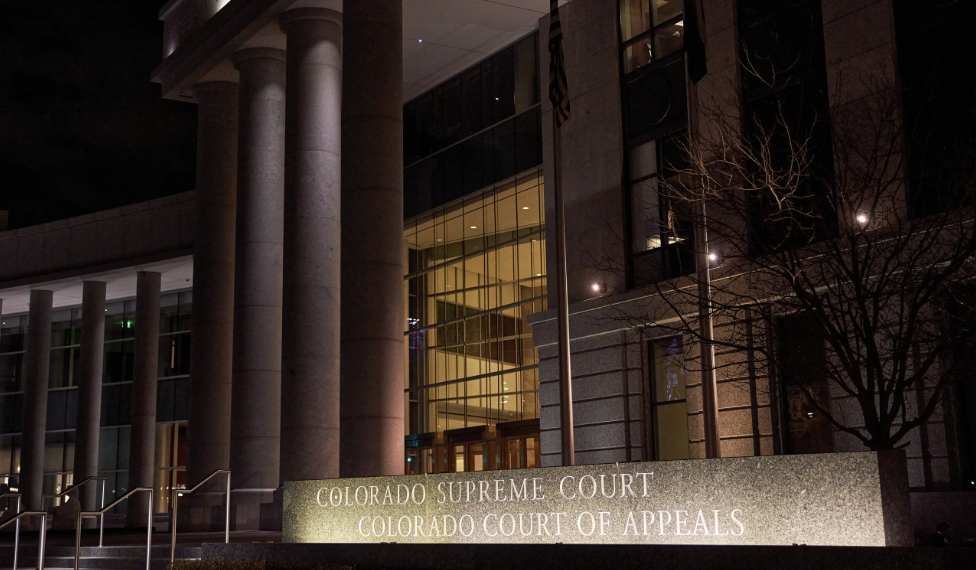
Democrats pushing a redistricting effort in Colorado ahead of the 2028 elections are growing concerned that a delayed ruling from the state Supreme Court could undercut their campaign before it gets off the ground.
Colorado Democrats are seeking to create as many as three new Democratic-leaning congressional districts before 2028, according to The New York Times. To move forward, voters would first need to approve two ballot measures tied to the proposed changes.
One measure would allow Colorado to conduct mid-decade redistricting. The other would permit the state to use a temporary, partisan congressional map for the 2028 and 2030 elections, bypassing the independent redistricting commission until new maps are drawn after the next census, the outlet reported.
The proposals are now before the Colorado Supreme Court after Republicans sued to block them. More than 50 days later, both sides are still waiting for the court to rule.
Backers of the measures argued in a Tuesday filing that the delay is already creating problems for the campaign.
“The delay creates uncertainty amongst petition signers, volunteers and supporters about the viability of the measure, and further erodes the fundamental right to the initiative power,” supporters of the redistricting effort wrote, according to The New York Times.
Scott Gessler, an attorney representing Republicans opposed to the measures, told the outlet that he does not view the court’s timeline as especially unusual, particularly if the justices are preparing a written opinion.
“That takes much longer,” Gessler said. “I think the timeline clearly shows that the court will issue a written opinion.”
Curtis Hubbard, a spokesman for Coloradans for a Level Playing Field, the group supporting the redistricting push, said the delay could keep voters from having a say.
The Colorado Supreme Court’s “foot-dragging risks stripping voters of their chance to weigh in on the most important issues in this election,” Hubbard told the outlet.
“If the court can effectively run out the clock on citizen initiatives, it casts a dark cloud over the entire process,” he added.
Although Colorado’s Supreme Court is officially nonpartisan, all seven current justices were appointed by Democratic governors, The New York Times noted.
Each ballot measure needs roughly 125,000 signatures from registered Colorado voters to qualify for the November ballot. The deadline to submit signatures is Aug. 3, according to the outlet.
Republicans challenging the proposals argue that the two measures are improperly linked.
“By tying the two initiatives together through use of the effective date clauses, the proponents are connecting two separate subjects, in violation of the single-subject requirement,” Gessler said. “This is effectively a way to avoid the single-subject requirement by forcing voters to accept or reject both initiatives as a package deal.”
The Colorado fight comes after California voters approved Proposition 50 in November 2025, a measure backed by Democrats in response to Texas redrawing its congressional map to create additional Republican-favored seats. California Democrats said the measure proposed new lines for many of the state’s 52 congressional districts and would offset five Republican seats drawn in Texas.
Former Attorney General Eric Holder, who chairs the National Democratic Redistricting Committee, defended Colorado’s push in a February statement, arguing that Democrats are responding to Republican-led redistricting efforts elsewhere.
“Republicans have demonstrated that their mid-decade gerrymanders will not end after the 2026 midterms, and in the face of that continued threat, Colorado is taking a responsible step by asking the voters to weigh in on the state’s temporary response,” Holder said.
“Let’s be clear: Colorado did not choose this fight. As Republicans pursue mid-decade gerrymanders in other states, the American people, including Coloradans, will fight back,” he added.