Peace in the Middle East has a long history of collapsing under its own weight. Diplomats announce breakthroughs. Leaders shake hands. Agreements are signed. And then, almost inevitably, the region’s deep fractures reassert themselves. That’s why every new initiative tends to come with an unspoken qualifier: if this works.
On Thursday, President Donald Trump moved to test that assumption.
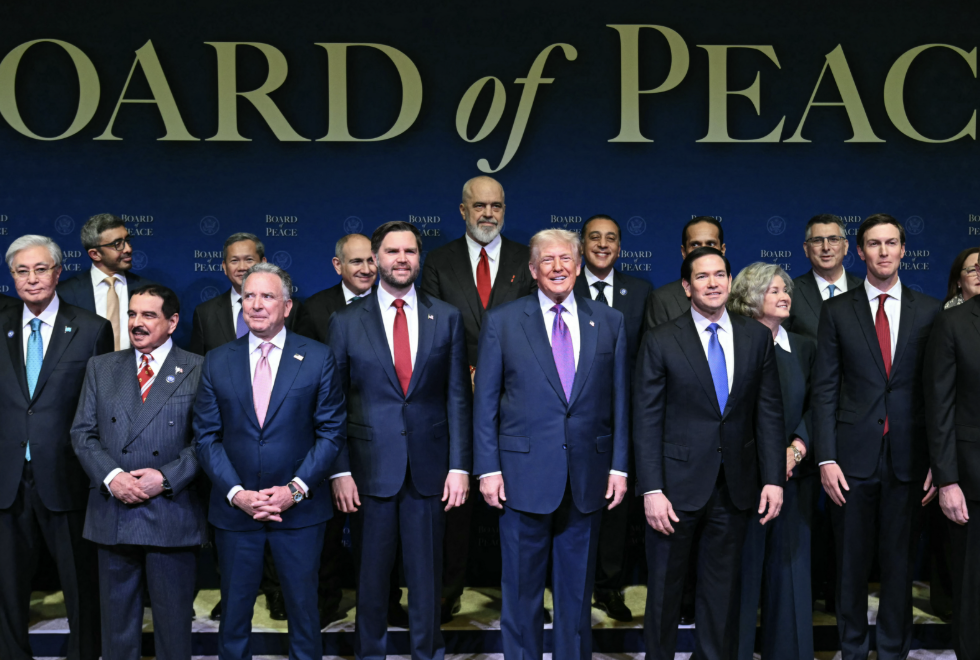
The president chaired the first official meeting of the newly formed Board of Peace, an ambitious coalition focused on rebuilding Gaza after months of devastation. And unlike many previous efforts, this one arrives with serious financial and political muscle behind it.
Earlier in the day, the administration confirmed that the United States would commit $10 billion to the reconstruction effort. That announcement alone signaled the scale of the undertaking. But the meeting itself added more substance to the headline.
U.S. Ambassador to the United Nations Mike Waltz detailed the ongoing humanitarian push already underway. According to Waltz, 4,200 aid trucks have entered Gaza, delivering food, clean water, and medical supplies. Just as notable was his claim that “diversion is down” — an acknowledgment that while aid theft has historically plagued relief efforts, the flow of resources is now reaching more civilians and less of it is being siphoned off.
The issue of diversion matters. Hamas has long been accused of intercepting and redirecting humanitarian supplies. Even a reduction in that activity suggests a shift in operational control on the ground — though it also underscores that the problem has not disappeared entirely.
.@USAmbUN: “Humanitarian aid has absolutely surged since the Gaza war ended… 4,200 aid trucks have entered Gaza each week for 13 consecutive weeks — the longest stretch of high volume assistance to Gaza in years. Diversion is down significantly from prior to the ceasefire.” pic.twitter.com/uGG7pvlx53
— Rapid Response 47 (@RapidResponse47) February 19, 2026
White House Press Secretary Karoline Leavitt added another key detail: before the meeting began, President Trump signed a document committing the initiative to financial integrity and transparency. Large-scale international rebuilding efforts have often been marred by corruption, waste, or misallocation of funds. The Board of Peace unanimously approved the resolution, signaling agreement that oversight will be central to the mission.
The White House also released an extensive reconstruction outline detailing timelines, resource allocation, infrastructure priorities, and coordination with international partners. Earlier reporting indicated that an international coalition has already pledged more than $5 billion toward the broader peace effort.
At the close of the meeting, Trump delivered remarks that hinted at even bigger ambitions.
“We’re going to straighten out Gaza, we’re going to make Gaza very successful and safe,” the president said. He suggested the Board of Peace model could extend beyond Gaza to other global hotspots, potentially even playing a role in reshaping a future post-theocracy Iran.
President Trump Participates in the Board of Peace Event https://t.co/F4CWWpi5kg
— The White House (@WhiteHouse) February 19, 2026
“This is a tremendous group of powerful people, and brilliant people,” Trump added. “We will help Gaza, we will straighten it out, we’ll make it successful, we’ll make it peaceful, and we will do things like that in other spots.”
The rhetoric was confident. The funding is significant. The coalition appears organized. But one unresolved factor looms over the entire effort. Hamas.
For reconstruction to translate into lasting peace, governance and security realities inside Gaza must fundamentally change. As long as Hamas retains operational control or influence, any rebuilding project faces structural instability. Infrastructure can be restored. Aid can flow. Investment can pour in. But if the underlying power structure remains intact, the cycle risks repeating itself.
Since the October 7, 2023, attacks on Israel, the central debate has not simply been about reconstruction, but about whether durable peace is even possible while Hamas remains a dominant force in Gaza.
The Board of Peace represents one of the most organized and heavily funded reconstruction efforts in recent memory. Whether it becomes a blueprint for regional stabilization — or another chapter in the Middle East’s long record of stalled peace efforts — will depend on how that central question is ultimately resolved.