It’s official — the Biden administration’s historic eraser just hit a major snag.
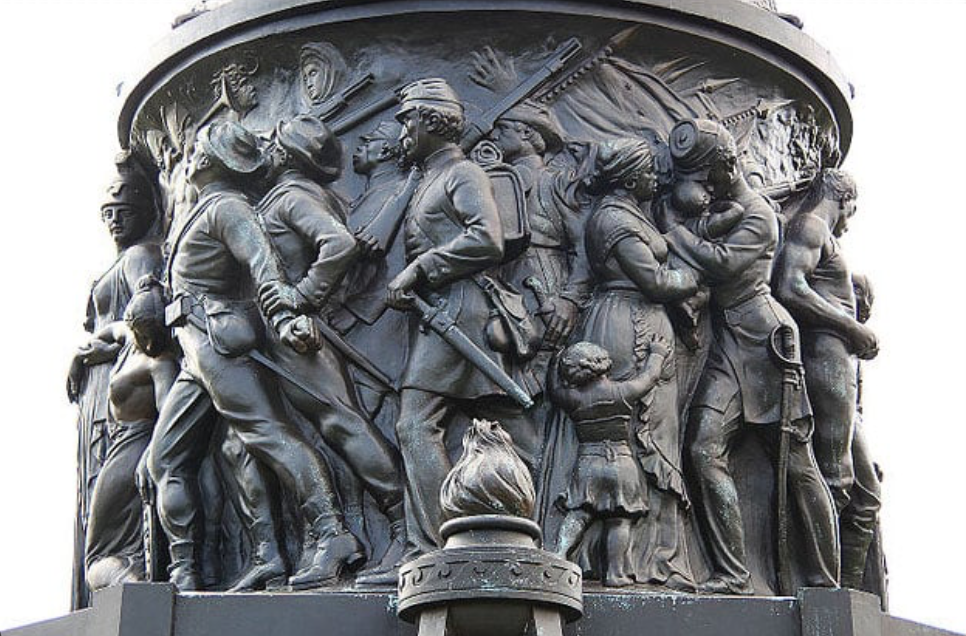
In a move that’s already got progressives clutching their pearls and composing angry Twitter threads, Defense Secretary Pete Hegseth announced that the Confederate Memorial — yep, that one — is heading back to Arlington National Cemetery.
The very same monument that was yanked out of the ground under Biden’s watch, boxed up like unwanted furniture, and banished to a Defense Department storage facility in Virginia? Yeah, it’s coming home. And not quietly, either.
Let’s be crystal clear: this isn’t just about bronze statues or old stone. This is about a battle for how America remembers its past — and who gets to control that narrative.
I’m proud to announce that Moses Ezekiel’s beautiful and historic sculpture — often referred to as “The Reconciliation Monument” — will be rightfully be returned to Arlington National Cemetery near his burial site.
It never should have been taken down by woke lemmings. Unlike…
— Secretary of Defense Pete Hegseth (@SecDef) August 5, 2025
You probably remember the removal last December. Tucked neatly between headlines about inflation, border chaos, and the latest round of DEI appointments, the Pentagon quietly took down the Reconciliation Monument — a 109-year-old sculpture commissioned in an era of healing, built by Moses Ezekiel, a Jewish-American Civil War veteran who also happened to be buried nearby.
No debate. No vote. Just poof — gone.
Why? Because the monument dared to acknowledge that, after the bloodiest war in American history, some people believed in moving forward. Because it honored Confederate dead not as heroes, but as fellow Americans buried on U.S. soil. Because it referenced reconciliation — something that apparently doesn’t fit in today’s progressive glossary.
Fast-forward to today, and Hegseth’s announcement lands like a political thunderclap.
“This beautiful and historic sculpture will be rightfully returned to Arlington,” he said. And just in case anyone missed the point, he added: “It never should have been taken down by woke lemmings.”
Boom.
Exclusive: Moses Ezekiel’s historic sculpture finally set for installation in Arlington Cemetery, by the Southern graves it once marked https://t.co/t8V8WN73zW pic.twitter.com/jl9TCcIw4U
— TheBlaze (@theblaze) August 5, 2025
The Left calls it a Confederate symbol. Hegseth calls it history — inconvenient, complicated, but real. And now, it’s coming back. Alongside the artist who made it. Where it belongs.
Let’s break that down.
This was not a monument celebrating slavery, or glorifying rebellion. This was a tribute to lives lost. A monument built at the direct approval of a future U.S. president — William Howard Taft — placed beside the graves of over 400 Confederate soldiers, meant to symbolize national healing. The kind of healing we now seem incapable of.
The fact that it references Isaiah 2:4 — “they shall beat their swords into plowshares” — didn’t matter to Biden’s Pentagon. Nor did the fact that every president for decades, including Barack Obama, sent flowers there on Memorial Day. History wasn’t the concern. Optics were.
That’s how we got here. A century-old monument ripped out of the nation’s most sacred military cemetery — not because of violence or hate — but because its existence made people uncomfortable.
And now? Cue the meltdowns.
Because if this statue can come back… what else might be next?
Hegseth isn’t alone. Virginia Governor Glenn Youngkin has already confirmed it’ll be refurbished and returned by 2027. That’s not just restoration — that’s a statement. A statement that erasing uncomfortable parts of history won’t fly forever.
And here’s the kicker: this all came the day after the National Park Service announced that the statue of Confederate General Albert Pike — remember that one? The one that rioters pulled down in 2020 and the feds just… never put back up? Yeah, that’s returning to D.C., too.
Coincidence? Not likely.
Feels more like a shift. Like someone finally hit the brakes on this cancel culture history tour and said, “You know what? Enough.”
Because at some point, Americans — real Americans — start asking: Who decides which memories are allowed to exist?
And more importantly: What’s next on the chopping block if we let this continue?
Spoiler: It’s not just statues.