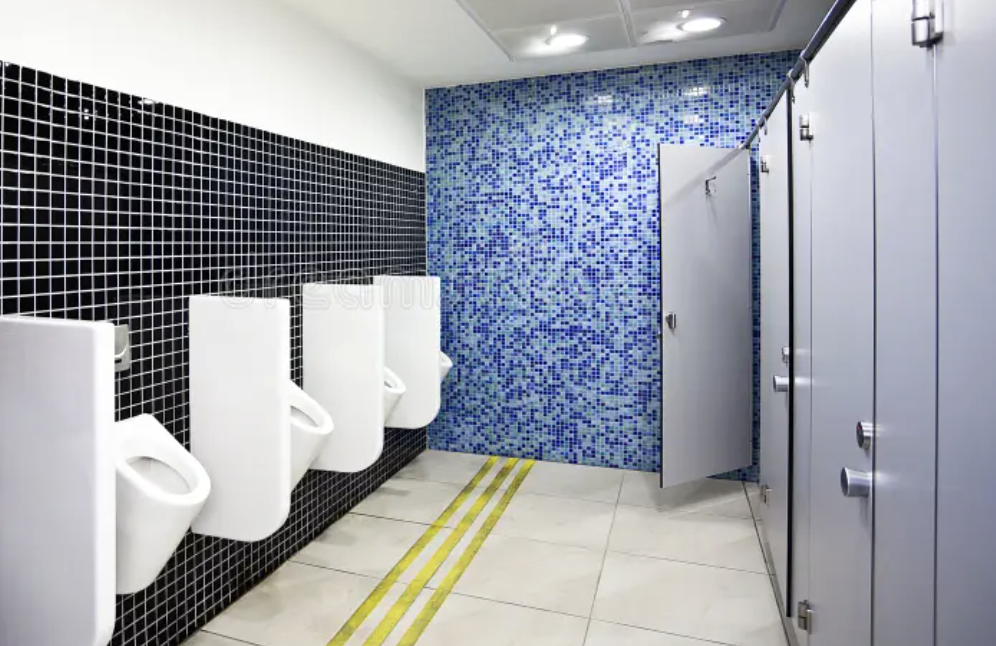
Democratic State Delegate Ken Kerr has introduced House Bill 941, legislation that would require all public buildings to stock men’s and women’s restrooms with menstrual hygiene products, including tampons. The proposal is framed as part of a broader push to ensure access to basic hygiene supplies, but critics say it raises fundamental questions about how public facilities are defined and used.
The bill lays out a clear mandate: every public restroom must provide essential items such as hand soap, toilet paper, drying devices, water, waste containers—and notably, menstrual hygiene products. These are defined in the legislation as tampons, sanitary napkins, and pads intended for use during the menstrual cycle.
During a House floor session on March 17, Republican Delegate Kathy Szeliga pressed Kerr on what the bill means in practice. She questioned the definition of “appropriately sized tampons” and asked directly whether the requirement would extend to men’s restrooms in major venues like stadiums.
Kerr responded that the wording simply ensures tampons are available, without specifying size. When pressed further, he confirmed that the requirement would apply to any state-owned building, meaning men’s restrooms in those facilities would also need to comply.
Szeliga also asked whether Kerr had considered limiting the requirement to women’s restrooms. Kerr stated that no such amendment had been proposed.
This is real. NOT satire.
Maryland is debating putting tampons in the MEN’S bathrooms at the Baltimore Ravens and Orioles stadiums.
Democrat Ken Kerr (who supports the initiative) argued the tampons need to be “adequately sized.”
Republican Kathy Szeliga fired back: “What does… pic.twitter.com/ZHyH9uHNsk
— Woke War Room (@WokeWarRoom) March 24, 2026
Supporters argue the measure is about accessibility and practicality, pointing out that emergencies happen and having products available in all restrooms could help avoid awkward or difficult situations. Some residents told local outlet WBAL-TV 11 News that they see no issue with the proposal, describing it as a non-controversial step toward convenience.
Critics question the necessity of placing menstrual products in men’s restrooms, with some calling the idea unnecessary or confusing. One resident described it as “weird,” reflecting a sentiment shared by those who believe the policy overreaches.
Still, others offered a more pragmatic take, suggesting that making products available in all restrooms could be helpful in certain scenarios—for example, allowing someone to quickly grab supplies for a partner in need.
As the bill moves forward, it is becoming a clear example of how even seemingly straightforward public policy proposals can ignite wider cultural and political debates. The outcome could set a precedent not just for Maryland, but for similar efforts in other states.