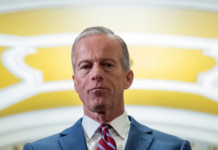
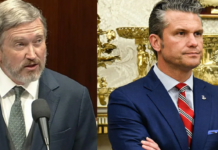
Senate Minority Leader Chuck Schumer urged party cohesion. However, a sharp conflict between him and Sen.-elect Abdul El-Sayed could derail that initiative. The two Democrats exchanged barbs throughout the 2026 election cycle. Currently, their confrontation endangers the Democratic caucus in the 120th Congress.
According to Fox News, the dispute hinges on three primary topics: U.S. military assistance to Israel, Medicare for All, and the party’s strategic trajectory. El-Sayed, a Michigan Democrat, made a startling remark to financial backers.
El-Sayed employed this specific language to outline a tactic for opposing moderate Democrats. He contended that primary battles send an unambiguous message to the party establishment. The statement targeted Sen. John Fetterman of Pennsylvania. Fetterman has endorsed U.S. military aid to Israel, including financing for the Iron Dome system. He also supported military strikes against Hezbollah and Iran. Conversely, El-Sayed ran his campaign against the war and rejected operations funded by taxpayers.
The “Ogre” Remark Explained
During a televised primary debate, El-Sayed identified the recipient of his statement. He informed the audience that his “ogre on a pike” comment was intended for Fetterman. El-Sayed charged the Pennsylvania senator with having “abandoned his elected values” through his support for U.S. military aid. A veteran Democratic Senate staffer told Fox News Digital they would “not be surprised” if tensions rose between the two lawmakers. However, the staffer expressed confidence that loyalty to the party would outweigh personal fights.
Leadership Questions Rise
While RedState reports that Michigan chose El-Sayed on Tuesday, his backing for Schumer is now uncertain. Schumer marked the midterm victories by sharing an image of himself grilling. He tweeted, “54 seats and counting. And I learned how to grill…these burgers and dogs are fully cooked.” Despite this celebration, some incoming members have already stated they will not vote for Schumer. These include Adam Hanilton and Troy Jackson.
When questioned about his bid for leadership, Schumer dismissed the possibility of losing the position. Yet El-Sayed refuses to pledge support for him. Speaking to The Associated Press, El-Sayed noted he does not currently know who else might run. He added, “I do believe we need new leadership and I think people are hungry for it.” In an interview on NBC, El-Sayed said, “We need action, we need leadership toward that action, and I’m interested to see, working with the rest of our caucus, what options we’ve got.”
A Party Divided
The division runs deep. Fetterman has also accused El-Sayed of seeking to become the “head of our emerging pro-Hamas wing here in the party.” This accusation underscores the sharp ideological split. El-Sayed received backing from the Senate Majority PAC, which directed millions to aid his victory. Yet, the relationship between the new senator and the party leader is now strained.
The Democratic Party faces a difficult path forward. Schumer wants to unite the group, but the personal attacks continue. The “ogre” comment remains a loud symbol of the divide. If the caucus cannot bridge this gap, their legislative goals will suffer. The party must choose between personal grudges and shared goals. The choice is now clear for every member to see.