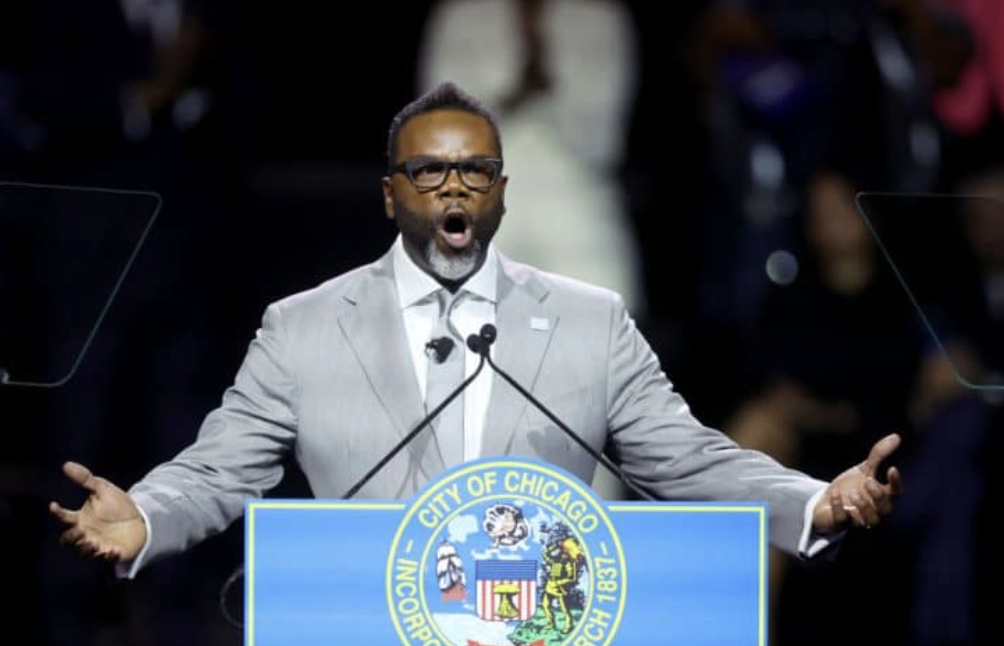
Chicago Mayor Brandon Johnson defended the city’s plan to phase out the tipped minimum wage on Wednesday, framing the issue in historical terms that drew attention during a tense policy debate.
Earlier in the day, the Chicago City Council voted 30–19 on an effort to override Johnson’s veto of a measure tied to the wage policy. The attempt fell four votes short, allowing the mayor’s decision to stand and keeping the scheduled pay increases for tipped workers in place. It marked Johnson’s third successful veto since taking office, according to local reporting.
Speaking to reporters afterward, Johnson criticized the push to reverse the policy and connected the tipped wage system to a broader historical context. He argued that efforts to roll back the changes ignored longstanding concerns about how tipped labor has been treated in the U.S.
“You just watched the entire city council, in transparency, try to take wages away from the very people who are part of an industry that has its ties to slavery,” Johnson said. He went on to reiterate his support for reparations initiatives in Chicago, adding that the policy direction reflects that broader goal.
Johnson’s comments came in response to a question about his administration’s Reparations Task Force and whether it complies with Illinois open meetings laws.
The task force, launched in June 2024 with an initial $500,000 in funding, is part of a wider effort by the city to examine and address what officials describe as systemic harm experienced by Black residents. As part of that initiative, the city recently rolled out a bus tour called “Repair Chicago,” aimed at gathering public input and personal accounts.
The wage policy itself would gradually eliminate the tipped minimum wage by requiring employers to raise base pay for tipped workers until it matches the standard city minimum wage. Under the current schedule, that rate is expected to reach $16.60 per hour by July 1, 2028, with incremental increases of about 8 percent each year.
Supporters of the plan argue it provides more stability for workers who often rely on inconsistent tips to make a living. Critics, however, say the policy could put pressure on restaurants already operating on thin margins.
The Employment Policies Institute, a group that has opposed similar measures in other cities, pointed to early economic data suggesting the changes may be hurting parts of Chicago’s restaurant industry. The group’s research director said the city should reconsider the policy before further impacts are felt by workers and business owners alike.
Johnson has consistently backed the phaseout, dating back to his 2023 mayoral campaign, when he described the tipped wage system as outdated and unfair. With the council unable to override his veto, the policy will continue moving forward as planned, setting up an ongoing debate over its long-term effects on workers and the city’s restaurant scene.